••
Interior and Local Government Ministers Task MMDCEs with Enhancing Intelligence-Led Security and Financial Independence
•3 min read•9 sources
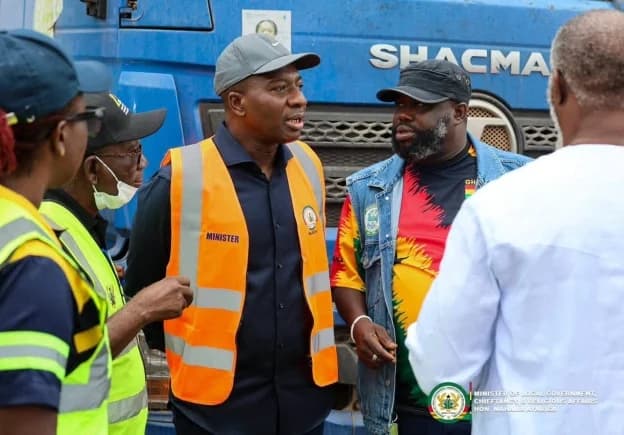
The Minister for the Interior, Mohammed Muntaka Mubarak, and the Minister of Local Government, Chieftaincy and Religious Affairs, Mahama Ayariga, have issued a series of strategic directives aimed at transforming the operations of Ghana’s Metropolitan, Municipal, and District Assemblies (MMDAs). Speaking at a high-level training program in Kumasi regarding the Security and Intelligence Agencies Act, 2026, Muntaka Mubarak urged Metropolitan, Municipal, and District Chief Executives (MMDCEs) to move beyond traditional policing and embrace proactive, intelligence-led security strategies. He emphasized that local authorities are uniquely positioned to detect emerging threats and must take an active role in crime prevention and information gathering to safeguard their jurisdictions.
Supporting this security mandate, the Deputy National Security Coordinator, Major General (Rtd.) William Ayamdo, stressed that the effectiveness of Ghana’s national security framework relies heavily on grassroots coordination. He called on MMDCEs to strengthen early warning systems and maintain seamless communication with the armed forces and law enforcement to combat modern threats such as violent extremism, cybercrime, and misinformation. The training serves as a directive for Regional Security Councils (REGSECs) to transition from being reactive responders to becoming preventive mechanisms that stabilize local communities.
Simultaneously, Minister Mahama Ayariga has called for a ‐paradigm shift‑ in how local assemblies are funded. At a meeting with development partners in Accra, Ayariga advocated for reducing the heavy reliance on external financial aid in favor of innovative local funding solutions and enhanced accountability. This push for self-reliance extends to urban management; Ayariga recently directed the Greater Accra Passenger Transport Executive (GAPTE) to strictly adhere to advertised schedules for the Aayalolo bus contra-flow system. By insisting that buses depart on time regardless of passenger numbers, the Ministry aims to improve urban mobility and instill time-management discipline among commuters in the capital.
While the government focuses on these reforms, administrative and regional challenges persist. In the Volta Region, former MDCEs from the previous administration have petitioned the Finance Ministry for unpaid terminal benefits, alleging they were overlooked during the 2021 transition. At the district level, the Nkwanta North Assembly has successfully elected Abubakar Alhassan as its new Presiding Member, who pledged to collaborate with District Chief Executive Isaiah Kudjoe Dordoe on local development policies. Additionally, Deputy Foreign Affairs Minister James Gyakye Quayson has launched a national sensitization campaign to better inform citizens about the benefits of ECOWAS, including trade liberalization and visa-free travel, ensuring that regional integration efforts provide tangible advantages to ordinary Ghanaians.

