••
National Peace Council and NGOs Launch Targeted Mentorship and Peace Initiatives for Ghanaian Students
•3 min read•3 sources
Ghana’s educational landscape is receiving a significant boost through a series of new initiatives aimed at fostering peace, leadership, and talent development among the youth. Leading these efforts, the National Peace Council (NPC) and several non-governmental organizations have launched specialized programs designed to equip students with essential life skills beyond the standard academic curriculum. These interventions target various demographics, ranging from junior high school girls to senior high school students, addressing critical issues such as bullying, conflict management, and financial literacy.
The National Peace Council has officially begun establishing peace education clubs in senior high schools (SHSs) across the country to combat rising incidents of bullying, student clashes, and the possession of weapons. According to Janet Dedei Sarney-Kuma, a director at the NPC, the initiative recently concluded a massive sensitization campaign in the Greater Accra Region, reaching approximately 12,650 students between July and August. The program seeks to create a supportive environment for peaceful coexistence by teaching conflict management and promoting responsible behavior both in-person and in digital spaces.
Simultaneously, the Aminu Initiative Ghana has introduced a dedicated mentorship and leadership program specifically for junior high school girls. Under the theme "Empowering her future: leadership, mentorship and possibilities," the initiative aims to bridge educational deficits for underprivileged children. Director Ayuba Mamadu Mohammed and Amdiya Abdul-Latiff, CEO of Eco-Me Africa, highlighted that the program features a comprehensive 12-module curriculum. This curriculum covers vital topics such as project design and financial literacy, intending to transform young girls into innovative problem solvers and confident future leaders.
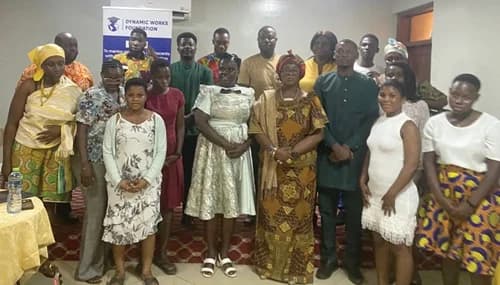
Complementing these efforts, the Dynamic Works Foundation, in partnership with the Star Ghana Foundation, recently launched the "Ababonnu Adom Akyədeə Mmerə" programme in Accra. Executive Director Gloria Cann emphasized that this initiative is focused on identifying and nurturing the inherent talents of adolescents through structured mentorship and empowerment. By providing positive role models and guidance, the foundation seeks to help young people overcome systemic challenges and reach their full potential, ensuring that no talent goes unrecognized.
These collective efforts represent a holistic approach to youth development in Ghana, focusing not only on academic excellence but also on emotional intelligence, safety, and leadership. By integrating peace education with technical and soft-skill mentorship, these organizations are laying a foundation for a more disciplined and capable next generation. As these programs scale across various regions, stakeholders remain optimistic that they will significantly reduce school-based violence while empowering students to take active roles in the nation's socio-economic development.