••
National Council of Parent-Teacher Associations Urges Collective Action to Address School Discipline and PTA Governance
•2 min read•1 source
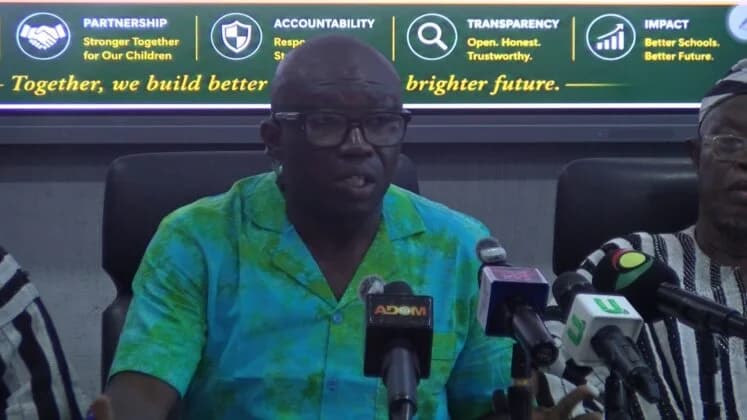
The National Council of Parent-Teacher Associations (NCPTA) has issued a call for a paradigm shift in Ghana’s educational system, asserting that schools and educators cannot bear the sole responsibility for the moral and academic development of children. During an emergency press conference, the Council emphasized that the growing challenges within the sector—including bullying, drug abuse, and examination malpractice—require a collaborative "all-hands-on-deck" approach. The NCPTA is advocating for a tripartite partnership between the state, traditional and religious leaders, and parents to ensure a more holistic environment for child upbringing and character formation.
Central to the Council’s proposal is the creation of a National Charter on School Discipline and Character Formation. This charter would serve as a framework for cooperation with the Ministry of Education and other stakeholders to instill discipline and ethical behavior in students. The NCPTA highlighted that parental involvement is not merely a preference but a constitutional mandate under the 1992 Constitution. They urged parents to move beyond being "mere spectators" and to take a proactive role in their children’s education, while still maintaining respect for the professional boundaries of teachers and school administrators.
The Council also addressed the evolving governance of Parent-Teacher Associations in the country. While the NCPTA expressed strong support for President John Mahama’s directive to restore fully functional PTAs across schools, they voiced significant concerns regarding the Ghana Education Service (GES). Specifically, the Council criticized the GES for issuing new PTA guidelines without what they termed "adequate consultation" with key stakeholders. This friction has reportedly led to legal proceedings, as the NCPTA seeks to ensure that the voices of parents are respected and that guidelines are formulated through a consensus-building process rather than top-down directives.
Looking forward, the NCPTA remains committed to fostering a respectful partnership among all actors in the education sector. By calling for a National Charter and demanding a seat at the table for policy decisions, the Council aims to bridge the gap between home and school. The ultimate goal, as outlined by the Council, is to create a supportive educational ecosystem where children are not only academically proficient but also disciplined citizens, a feat they believe is only possible when parents and community leaders fulfill their fundamental responsibilities alongside the government.
Related topic
Ghana Education Service (GES): Latest News Today →
