••
African Leaders Prioritize Security and Cultural Diplomacy to Foster Regional Stability
•3 min read•4 sources
Diplomatic and security efforts across West Africa are intensifying as regional leaders seek to move beyond crisis management toward proactive stability. In Ghana, the Namibian High Commissioner, Mrs. Ndiyakupi Nghituwamata, recently concluded a three-day familiarization tour of the Volta Region, visiting Keta, Anloga, and Ketu South. This tour, which followed the presentation of her credentials to President John Mahama, focused on strengthening bilateral relations through cultural diplomacy and historical awareness. Mrs. Nghituwamata highlighted the potential for agricultural cooperation, particularly in tomato production, while advocating for the rehabilitation of historical landmarks like the Keta Fort to preserve the continent's shared history.
Parallel to these diplomatic engagements, Ghana and C$"te d’Ivoire are deepening their maritime security cooperation. Starting in August 2026, the two nations will conduct a joint boundary inspection to enhance operational security and mutual understanding. This initiative builds on a 2017 ruling by the International Tribunal for the Law of the Sea (ITLOS) and aims to address persistent regional threats such as piracy and illegal fishing. Major General Anthony Ntem emphasized that these exercises are critical for maintaining the integrity of maritime borders and ensuring the safety of shared waters, with planning already underway for future conferences to be hosted in C$"te d’Ivoire.
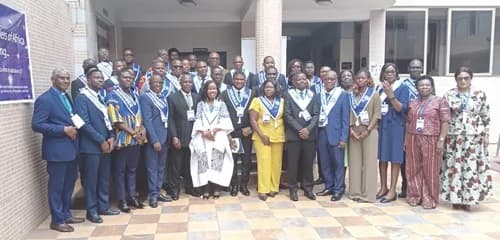
On the broader continental stage, military and security experts are advocating for a fundamental shift in Africa's approach to peace. During the 2026 General Assembly of the Association of Conflict, Peace and Security Experts in Africa (ACPSEA) in Accra, Brigadier General Lawrence Deku, Deputy Commandant of the Kofi Annan International Peacekeeping Training Centre (KAIPTC), urged nations to prioritize conflict prevention over reactive management. He noted that food insecurity and political instability remain significant barriers to economic growth. To combat these, speakers at the assembly called for increased investment in early warning systems and mediation to address the root causes of conflict, such as poverty and unemployment, in alignment with the African Union’s peace frameworks.
Despite these strides toward internal cooperation, the region faces complex external pressures, highlighted by the recent arrival of the first group of deportees in Liberia under a controversial third-country deal with the United States. While the program intends to relocate up to 1,200 individuals to the West African nation, immigration lawyers have raised serious concerns regarding the rights of deportees being sent to countries they may not consider home. As African nations continue to refine their security and diplomatic strategies, balancing international agreements with humanitarian protections and regional integration remains a pivotal challenge for the continent's future development.
Related topic
John Mahama: Latest News & Updates →

