Ghana News AI
HomeBriefsAsk GhanaTopicsTools
•
•

Stay Informed

Get AI-curated news briefs from Ghana delivered to your inbox every morning. Free forever, no spam.

Explore

  • Home
  • Briefs
  • About

Categories

  • Politics
  • Business
  • Sports
  • Entertainment
  • Africa

Features

  • Analysis
  • Cedi Rates
  • Dollar to Cedi
  • Ghana Gold Price
  • BoG Policy Rate

Topics

  • Armed Forces Recruitment
  • WAEC Results & News
  • Nana Ama McBrown
  • NDC News
  • All Topics

Legal

  • Privacy Policy
  • Terms of Service
Ghana News AI© 2026. All rights reserved.
Made withfor Ghana
education

National Identification Authority Launches Child Registration as Ghanaian Students Abroad Convene for Global Development Forum

6th July•2 min read•5 sources
National Identification Authority Launches Child Registration as Ghanaian Students Abroad Convene for Global Development Forum
  1. Home
  2. /Education
  3. /National Identification Authority Launches Child Registration as Ghanaian Students Abroad Convene for Global Development Forum

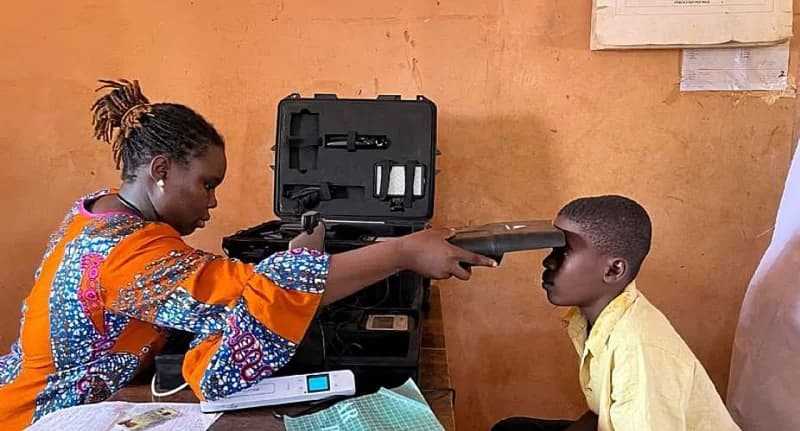
The Ghanaian youth and education landscape is seeing significant developments both at home and abroad, as the National Identification Authority (NIA) begins a permanent registration drive for children while student unions launch a global forum for national development. Starting July 6, 2026, the NIA has opened its district offices in the Volta and Oti regions to provide ongoing Ghana Card registration services for children aged six to 14. This initiative, which follows previous mass registration efforts, aims to ensure that the younger population is integrated into the national identity system, providing them with essential documentation for future academic and social services. Parents in these regions are encouraged to visit district offices with the necessary documents to access this free service.

Simultaneously, the National Union of Ghana Students (NUGS) chapters in Germany, the United Kingdom, and China have collaborated to host the inaugural Ghana Diaspora Students Forum (GDSF). Under the theme "Pathways, Ecosystems and Diaspora as Development," this virtual gathering serves as a strategic platform for Ghanaian students worldwide to contribute their insights toward national progress. The forum aims to shift the narrative of the diaspora's role, moving beyond financial remittances to highlight their potential as collaborative partners in research, innovation, and policy formulation for the education and economic sectors.

A central highlight of the GDSF is the participation of key government and academic figures, including a keynote address by Mr. Kofi Okyere-Darko from the Office of the President. As the Director of Diaspora Affairs, Mr. Okyere-Darko will outline the government's policy priorities regarding students abroad and discuss how their international experience can be leveraged for local growth. The event also features panel discussions on academic mobility, career opportunities, and entrepreneurship, fostering a spirit of leadership and global collaboration among participants that bridges the gap between international study and national service.

The forum is expected to conclude with the issuance of a formal communiqué containing actionable recommendations for policymakers and education stakeholders. By establishing this forum as an annual engagement platform, NUGS and its partners aim to create a sustainable pipeline for talent and knowledge transfer between Ghanaian students overseas and their home country. Together with the domestic push for universal identification via the NIA, these efforts represent a multi-pronged approach to securing the future of Ghana's youth, whether they are pursuing basic education in local primary schools or advanced degrees in international universities.

Our Take

From the Team

Coming Soon

Our team will add key insights, trends, and actionable takeaways to help you stay informed faster.

This story touches markets covered on Anansi Intelligence ↗.

More from education

Continue exploring similar stories

Ghana Advances Human Capital Development Through STEM Initiatives, Institutional Mergers, and Global Academic Partnerships
education|Yesterday

Ghana Advances Human Capital Development Through STEM Initiatives, Institutional Mergers, and Global Academic Partnerships

Ghana is increasingly prioritizing the development of specialized human capital to meet the demands of modern industry, ranging from nuclear energy to artificial intelligence. Speaking at the US-Africa Nuclear Summit, Minister Emmanuel Armah-Kofi Buah emphasized that the nation must build "nuclear talent, not just reactors," urging immediate investment in STEM education and engagement with the African diaspora to enhance knowledge transfer. This call for skill-building is echoed by Casely Ato Coleman of IMANI Africa, who warned that Ghanaian graduates must look beyond academic degrees to survive a labor market increasingly reshaped by AI. At the University of Ghana, Coleman highlighted that employers now prioritize cognitive abilities and behavioral attributes, necessitating a shift toward competency-based learning and practical career planning to bridge the gap between theory and practice. Local institutions are also innovating to improve internal cohesion and professional standards. The University of Media, Arts and Communication (UniMAC) has launched the "Concord" initiative, designed to integrate students from the newly merged institutes of Journalism, Film and Television, and Languages through structured academic competitions. Despite funding hurdles, the initiative has successfully promoted a shared sense of belonging among diverse disciplines, demonstrating that diversity can be a resource for collaboration. Similarly, the Registrar-General’s Department is focusing on internal capacity building, with Registrar-General Grace Ama Issahaque recently leading a two-day workshop for the Ghana Industrial Property Office. The training focused on strict quality control in trademark administration, emphasizing that accurate data capturing is essential for efficient service delivery in Ghana's commercial landscape. On the international stage, the movement of high-level Ghanaian expertise continues to shape global discourse, though not without institutional challenges. Former Bank of Ghana Governor Dr. Ernest Addison has been appointed as a Senior Research Fellow at Harvard University, where he will lead seminar sessions focusing on his eight-year tenure and Ghana's economic developments. Simultaneously, the tragic passing of prominent academic Jason Arday following his resignation from the University of Cambridge has sparked a critical debate on the duty of care universities owe to the scholars they celebrate. These developments underscore a pivotal moment for Ghanaian education and professional life: a transition toward a model that values practical expertise, institutional accountability, and the strategic cultivation of talent for the 21st-century global economy.

Nana Francis Essel Okyeahene  (2nd from left) receiving the award
education|Yesterday

Education Reform and Infrastructure Push: Stakeholders Seek BECE Subject Reduction and SHS Performance Improvements

Education stakeholders across Ghana are intensifying efforts to overhaul the country's academic performance and infrastructure, focusing on both basic and senior high school levels. In a move to streamline the national curriculum, traditional authorities are advocating for a significant reduction in the number of subjects examined at the Basic Education Certificate Examination (BECE). Simultaneously, the Volta Regional Education Directorate has launched a strategic intervention to address declining West African Senior School Certificate Examination (WASSCE) results, amidst promises from Parliament to prioritize school logistics and infrastructure under the administration of President John Mahama. Nana Francis Essel Okyeahene, the Gyasehene of Gomoa Wassa, has formally urged the Ministry of Education and the Ghana Education Service to reduce BECE subjects from the current 10 or 11 down to approximately five. He argues that the current academic load is overwhelming for junior high school students and serves as a major contributor to high failure rates. By narrowing the scope of the examination, Nana Okyeahene suggests that the educational system can pivot toward practical, skills-based learning that better prepares youth for the job market, thereby addressing the growing challenge of graduate unemployment. At the secondary level, the Volta Regional Education Directorate has convened a three-day strategic capacity-building clinic for the heads of all 68 Senior High Schools (SHS) and Senior High Technical Schools (SHTS) in the region. Acting Director Jemima Marian Akua Adzroe expressed serious concern over recent WASSCE performance, revealing that some institutions have recorded zero progression rates. Supported by teacher unions such as the Ghana National Association of Teachers (GNAT) and the National Association of Graduate Teachers (NAGRAT), the clinic focuses on enhancing leadership, analyzing performance data, and developing school-specific action plans to reverse the downward trend in academic outcomes. Complementing these academic reforms, the Chairman of the Parliamentary Education Committee, Peter Nortsu Kotoe, has assured school leaders that the government is actively working to resolve critical deficits in furniture, vehicles, and infrastructure. While acknowledging that previous funding gaps have hindered progress, Kotoe noted that interventions are underway to complete stalled projects and improve transportation for school management. This aligns with calls from the Ghana Academia Awards for President John Mahama to specifically target rural school infrastructure, ensuring that resource gaps between urban and rural educational centers are bridged to create an equitable learning environment nationwide.

NYA and YEA Scale Up Youth Employment Initiatives with 100,000 New Apprenticeship Targets for 2026
education|Yesterday

NYA and YEA Scale Up Youth Employment Initiatives with 100,000 New Apprenticeship Targets for 2026

The government of Ghana has significantly expanded its youth empowerment and employment initiatives, with the National Youth Authority (NYA) and the Youth Employment Agency (YEA) announcing record-breaking recruitment and training figures. In 2025, the National Apprenticeship Programme successfully trained 14,000 young people, exceeding its initial target of 10,000. Following this success, NYA Chief Executive Officer Osman Ayariga announced an ambitious roadmap to train 100,000 youth by the end of 2026, focusing on bridging the skills gap through a curriculum that balances 30% classroom instruction with 70% hands-on practical training. To support this expansion, the NYA is implementing a comprehensive support system for young entrepreneurs and mastercraft persons. Beyond technical training, the authority is certifying mastercraft persons to ensure high standards of mentorship and is providing youth-owned businesses with critical financial relief. Already, 21 endorsements for tax holidays have been approved, signaling a shift toward making youth entrepreneurship more sustainable and rewarding under the current administration's economic framework. Simultaneously, the Youth Employment Agency (YEA) has achieved a major milestone by recruiting over 90,000 young individuals for various public sector and community-based roles. CEO Malik Basintale revealed that these recruits have been integrated into vital services, including 6,000 personnel in community medical services and 12,000 in community policing, alongside roles in the fire service and research. This multi-sectoral approach aims to provide immediate employment while addressing critical manpower shortages in essential services across the country. Looking forward, the government is set to launch the Graduates and Corporate Support Programme, a strategic collaboration between the YEA, the National Service Secretariat, and the 24-Hour Economy initiative championed by President John Mahama. This upcoming programme is designed to create additional pathways for university graduates to enter the corporate workforce, ensuring that the momentum of the 24-Hour Economy is fueled by a skilled and energetic youth population. These collective efforts represent a centralized push to reduce unemployment and foster industrial growth through vocational excellence and professional placement.

University of Ghana to Host 'Tell Your Story' Mentorship Conference and 2026 Youth in Tourism Festival
education|Yesterday

University of Ghana to Host 'Tell Your Story' Mentorship Conference and 2026 Youth in Tourism Festival

The University of Ghana is set to host two major youth-centered initiatives this August, aiming to bridge the gap between seasoned leaders and the next generation. The 'Tell Your Story' Conference, scheduled for August 22, 2026, will serve as a platform for prominent figures from politics, business, and industry to share their personal professional journeys. Organized by the General Secretary of the National Union of Ghana Students (NUGS), Benedict Amerloku, the event focuses on authentic narratives rather than traditional leadership theories, highlighting the resilience needed to overcome career challenges. This mentorship-driven approach is designed to provide young Ghanaians with relatable insights into building credibility and navigating the complexities of public service and private enterprise. Following this, the Tourism Society of Ghana (TOSOGHA) will launch the 2026 Youth in Tourism Festival (YOTOFEST) on August 25 at the same venue. Under the theme 'My Culture, My Pride: The Role of the Youth in Promoting Domestic Tourism,' the festival aims to empower young people through skill development and networking. TOSOGHA Executive Director Joseph Amartey noted that the event, which expects to attract over 3,000 participants, will feature summits and exhibitions aimed at promoting Ghana's tourism brand. The festival will conclude with an awards ceremony recognizing excellence in tourism and the creation of youth opportunities. Together, these events reflect a concerted effort by the University of Ghana and its partners to foster a new era of leadership and economic engagement. By combining narrative-based mentorship with practical industry exposure, these initiatives prepare emerging leaders to contribute meaningfully to national development. This dual focus on leadership and culture ensures that the next generation is equipped with both the ethical foundation and the professional skills necessary to thrive in a globalized economy.

All
africa
business
education
entertainment
health
news
politics
sports
technology