••
Vice-President Opoku-Agyemang and ECOWAS Jurists Call for Strengthened Regional Cooperation on Climate and Justice
•3 min read•3 sources
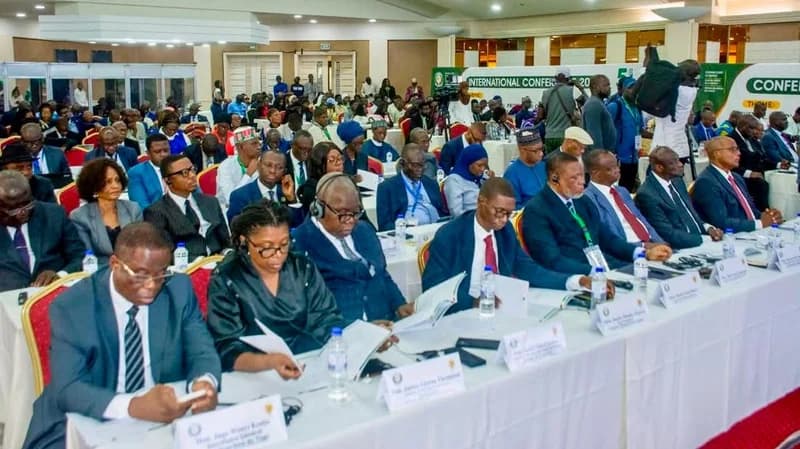
Vice-President Professor Naana Jane Opoku-Agyemang has called for a more robust and coordinated regional response to the multifaceted challenges of climate change, displacement, and insecurity within West Africa. Speaking at the Second Parliamentary Seminar of the ECOWAS Parliament in Accra on September 22, 2026, the Vice-President emphasized that environmental degradation is no longer just a development issue but a primary driver of cross-border conflict. Her remarks coincided with high-level discussions in Dakar, Senegal, where leaders of the ECOWAS Community Court of Justice gathered to address critical hurdles in the regional judicial framework, marking a week of intense focus on the future of West African integration.
During the Accra seminar, Professor Opoku-Agyemang urged member states to effectively implement regional frameworks and mobilize climate finance for resilient agriculture, clean energy, and water management. She specifically highlighted the link between youth insecurity and limited economic opportunities, arguing that investments in education and employment are fundamental to regional peace. To mitigate the impact of climate-induced displacement, the Vice-President proposed enhanced early-warning systems and stronger legislative support to ensure that the benefits of integration reach the most vulnerable citizens. Her appeal underscores the necessity of protecting livelihoods to ensure food security and long-term stability across the sub-region.
Parallel to the discussions on climate security, the ECOWAS Community Court of Justice held its 2026 Annual International Conference in Dakar to mark its 25th anniversary. Justice Ricardo Gon''calves, President of the Court, warned that the institution is at a "critical crossroads," particularly regarding the enforcement of judgments and the protection of human rights. Despite two and a half decades of progress, the court continues to face resistance from some member states in executing its decisions. ECOWAS Commission President Gen. Birame Diop and other legal experts, including Professor Ernest Kofi Abotsi, called for institutional transformations—such as new arbitration rules and an Appeal Division—to enhance judicial integrity and ensure the court remains a credible arbiter of justice for the region’s population.
These dual regional gatherings underscore a pivotal moment for ECOWAS as it seeks to balance immediate security concerns with long-term institutional stability. While Vice-President Opoku-Agyemang’s call for climate resilience aims to address the root causes of migration and conflict, the Dakar conference highlights the necessity of a functioning legal system to uphold the rule of law. Together, these initiatives reflect a broader strategy to refine regional frameworks and the ECOWAS 2027 budget, ensuring that West African integration evolves into a tangible force for prosperity, peace, and human rights for all member nations.
