••
Communications Minister Sam George Links Galamsey to 25% of Fibre-Optic Cuts as Ministers Call for Sustainable Mining Reform
•2 min read•3 sources
Illegal mining, locally known as galamsey, is now responsible for approximately 25% of all fibre-optic cable cuts in Ghana, posing a severe threat to the nation’s digital stability. Speaking at a Government Accountability Series event on September 7, 2026, Communications Minister Samuel Nartey George revealed that these underground infrastructure disruptions are increasingly jeopardizing voice and data services. This revelation comes at a time when the government is intensifying efforts to transition the extractive sector toward more sustainable and accountable practices to protect both the environment and critical public utilities.
Minister George highlighted a significant challenge in maintaining the telecommunications network: unlike road construction firms that typically report accidental cable damage, illegal miners operate in secrecy and rarely notify authorities when they sever connections. This lack of transparency complicates repair efforts, particularly in regions where alternative fibre routes are sparse. The Minister warned that the persistent destruction of these networks not only incurs massive operational costs for telecommunications providers but also risks widespread service blackouts that could hinder Ghana’s digital economy and essential communications.
Parallel to these infrastructure concerns, the Minister for Lands and Natural Resources, Emmanuel Armah-Kofi Buah, has urged Ghanaian mining firms to rethink their operations by adopting the "Zijin model" of environmental management. Following an inspection of the Zijinshan Open-pit Gold and Copper Mine in China, Mr. Armah-Kofi Buah emphasized that mineral extraction must coexist with ecological restoration, water protection, and land reclamation. He called on local companies to prioritize these practices to ensure that the wealth generated from Ghana’s natural resources does not come at the permanent cost of the country’s landscape and biodiversity.
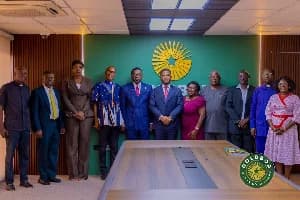
Support for more robust oversight in the mining sector is also gaining traction among civil society and religious leaders. On September 7, a delegation from the Christian Council of Ghana paid a courtesy visit to the Ghana Gold Board (GoldBod), praising the organization for its recent initiatives to enhance transparency and responsible gold trading. As the Mahama administration continues to navigate the complexities of the mining industry, the focus remains on balancing the economic necessity of resource extraction with the urgent need to protect the nation’s infrastructure and environmental heritage.
Live rates
Ghana gold price →
