••
Shaima Hussein urges Ghana to prioritise home-grown AI solutions
•2 min read•1 source
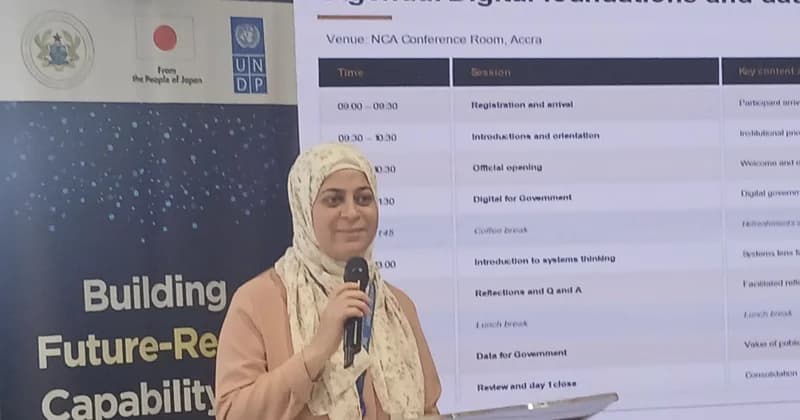
Shaima Hussein, the United Nations Development Programme (UNDP) Deputy Resident Representative, has called on the Ghanaian government to prioritise locally developed Artificial Intelligence (AI) solutions to address specific national needs. Speaking at a training workshop in Accra, Ms. Hussein emphasized that home-grown innovations are essential for maintaining digital sovereignty and ensuring that technological advancements align with the country's unique socio-economic landscape. The initiative seeks to shift the focus from over-reliance on external technologies toward building internal capacity within the public sector.
The training session, which was funded by the Government of Japan, targeted 50 government officials who are being prepared to serve as certified Digital and AI Champions. These officials are expected to lead a coordinated approach to digital transformation across various state agencies. Ms. Hussein highlighted that the integration of AI into public services should not be a haphazard process but a deliberate effort to enhance the efficiency of public institutions and the delivery of digital services to citizens.
A significant portion of the UNDP's advocacy focused on the ethics of technological adoption. Ms. Hussein urged the participating officials to evaluate AI technologies with a critical eye, emphasizing the need for robust data governance and responsible adoption frameworks. By addressing ethical concerns and ensuring data security, Ghana can foster a sustainable digital ecosystem. This sentiment was echoed by Emmanuel Ofori from the Ministry of Communication, who noted that AI plays an increasingly vital role in data-driven decision-making and encouraged participants to innovate within their respective sectors.
Ultimately, the programme aims to foster long-term digital development that remains responsive to the specific requirements of the Ghanaian people. By empowering civil servants with the tools to manage and implement AI, the UNDP and its partners hope to build a public sector that is both technologically advanced and ethically grounded. This focus on local solutions is intended to ensure that the benefits of the fourth industrial revolution are felt across all levels of Ghanaian society.


