••
SIGA’s GH¢19.8 Billion Profit Claim Under Fire as Critics Dispute “Massive Turnaround” of State-Owned Enterprises
•3 min read•7 sources
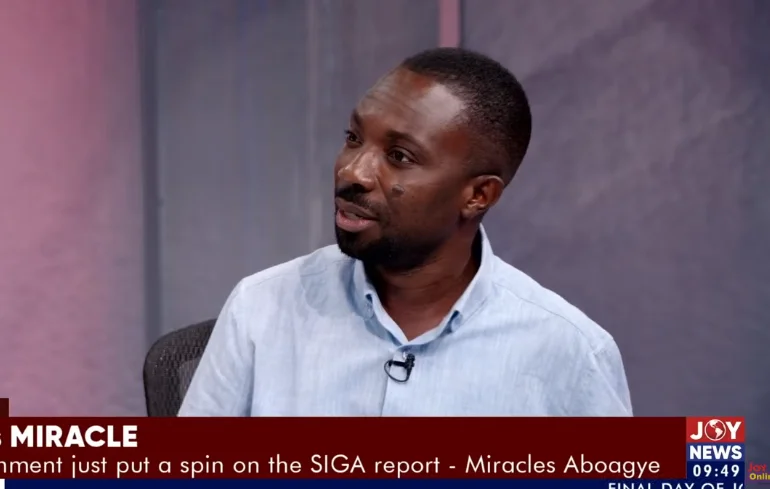
The release of the 2025 State Ownership Report by the State Interests and Governance Authority (SIGA) has ignited a fierce debate over the financial health of Ghana’s State-Owned Enterprises (SOEs). SIGA reported a dramatic "massive turnaround," claiming a combined net profit of GH¢19.8 billion for 2025, a stark contrast to the GH¢2.25 billion loss recorded in 2024. However, this narrative of recovery has been met with skepticism from policy analysts and political figures who argue the figures are either misleading or marred by significant analytical errors, casting doubt on the government's portrayal of economic efficiency.
Prof. Michael Kpessa-Whyte, Director General of SIGA, has vigorously defended the report, asserting that the figures were not "conjured" but derived from audited financial statements. He attributed the improved performance to a combination of operational efficiencies and favorable foreign exchange movements. Despite this defense, Bright Simons, Vice President of IMANI Africa, challenged the integrity of the data, noting that the number of profitable entities actually fell from 35 to 34. Simons further disputed SIGA’s claim of achieving the highest audited proportion, pointing out that the reported 66% submission rate is lower than the 68% achieved in 2021. The disagreement escalated when Simons rejected Kpessa-Whyte’s suggestion that he had used artificial intelligence to generate his critique, calling the accusation "offensive" and clarifying that technology was only used for data extraction.
Adding to the criticism, NPP Communications Director hopeful Dennis Miracles Aboagye accused the government of putting a "spin" on the report to suggest an unprecedented success. Aboagye claimed to have identified 19 specific errors in the analysis that could mislead the public, suggesting that the government is portraying unspent public funds as operational efficiency. He called for a deeper, institutional-level examination of entities like COCOBOD rather than relying on aggregate figures. These sentiments were echoed by legal expert Yaw Appiah Lartey, who recommended that SIGA distinguish between commercial and public service entities in its reporting. Lartey argued that aggregating profit-making bodies with service institutions like GETFund creates a distorted picture of commercial performance.
As the debate continues, the conflicting interpretations of the State Ownership Report highlight a broader struggle over transparency and governance within Ghana's public sector. While SIGA maintains that its assessment of 162 entities shows substantial progress, the persistent calls for more granular reporting and adherence to international accounting standards suggest that the "turnaround" remains a matter of intense dispute. The outcome of this discourse will likely influence future policy decisions regarding the management of state assets and the level of public trust in government-led economic reporting as the country navigates its current fiscal challenges.
Related topic
NPP (New Patriotic Party): Latest News →Live rates
Dollar to cedi rate →

