••
Supreme Court Affirms Constitutional Process for Chief Justice Removal Amid Landmark Corruption and Human Rights Rulings
•3 min read•7 sources
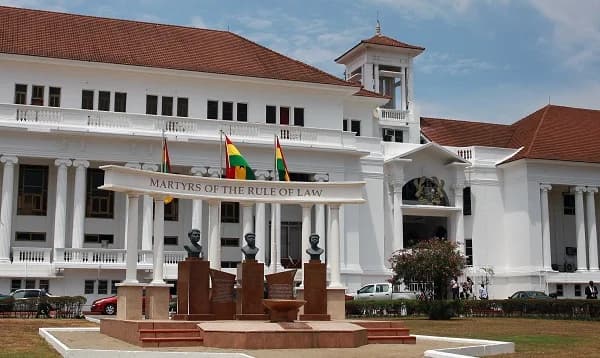
The Supreme Court of Ghana has delivered a landmark 84-page judgment affirming the constitutionality of the removal procedure for Chief Justice Gertrude Esaaba Sackey Torkornoo. In a decisive ruling, the Court dismissed two consolidated suits filed by Vincent Ekow Assafuah and Theodore Kofi Atta-Quartey, which challenged the President's actions and the role of the Council of State. The judgment clarified that Article 146 of the 1992 Constitution is self-executing, meaning it does not require additional subsidiary legislation to function. Furthermore, the Court established that the right to a fair hearing is properly calibrated to the Committee stage of an inquiry rather than earlier stages of the process, reinforcing the procedural framework for future disputes regarding judicial independence and executive authority.
Parallel to this constitutional affirmation, the Supreme Court also struck out a review application filed by Justice Torkornoo concerning an earlier injunction application. The seven-member panel noted procedural defects in the filing, specifically regarding the status of the former Attorney-General and the lack of a formal application for withdrawal. This judicial activity coincides with significant developments in the High Court, where Solomon Asamoah and Professor Christopher Ameyaw-Akumfi have been ordered to open their defense in a trial involving the unapproved $2 million Accra SkyTrain project. The defendants face charges of conspiracy and willfully causing financial loss to the state, following prosecution claims that they bypassed necessary board approvals for the investment.
In other major legal proceedings, the Economic and Organised Crime Office (EOCO) has testified regarding a GH₵1.5 million payment linked to Kwabena Adu-Boahene, the former Director-General of the National Signals Bureau. The funds were allegedly traced through various company accounts before being used for property acquisitions at Mayfair Garden Estate. Meanwhile, the High Court in Accra has upheld the extradition of Frederick Kumi, also known as Abu Trica, to the United States. Kumi is accused of involvement in an $8 million romance scam targeting elderly individuals; despite a challenge from his legal team regarding the 1931 Extradition Treaty, the court ruled that applicable UN conventions on money laundering and conspiracy take precedence.
Beyond financial and administrative litigation, the Ghana Bar Association (GBA) has raised serious alarms over human rights in the Upper East Region. GBA President Anthony Namoo recently condemned alleged extrajudicial killings and unlawful abductions attributed to the Inspector-General of Police’s Special Operations Team, known as "Black Maria." During a remembrance service for murdered judges, the GBA emphasized the presumption of innocence and urged the police hierarchy to adhere strictly to due process. These diverse cases collectively underscore a period of intense judicial scrutiny in Ghana, as the courts navigate the complex intersections of executive power, financial accountability, and the protection of fundamental human rights.

