••
Tigrayan Communities Celebrate Ashenda Festival Amid Regional Tensions and Peace Efforts in the DRC
•2 min read•3 sources
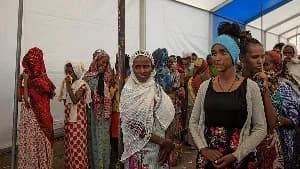
East and Central Africa continue to navigate a complex landscape of cultural resilience and deep-seated conflict. In Ethiopia, Tigrinya women have taken to the streets of Addis Ababa to celebrate the traditional Ashenda festival, even as the specter of renewed violence looms over the Tigray region. Simultaneously, in the Democratic Republic of Congo (DRC), a fragile peace roadmap has been established between the government and M23 rebels, highlighting the ongoing struggle to stabilize a region where economic survival often clashes with public health and security.
The Ashenda festival, a vibrant cultural milestone marking the end of the 15-day Filseta (Assumption) fast, saw young Tigrinya girls donning colorful traditional dresses and intricate braided hairstyles. Throughout Addis Ababa, the celebrations were characterized by traditional songs and dances, serving as a display of cultural identity. However, the festivities were tempered by a palpable sense of anxiety. Many participants expressed fears that the peace following the previous Tigray conflict might be at risk, with rising regional tensions threatening to disrupt the relative calm that allowed such public celebrations to return.
Further south, the Democratic Republic of Congo remains at a critical juncture following high-level negotiations in Switzerland. Representatives from the DRC government and the M23 rebel group have committed to a sequenced peace roadmap, which includes a mission to verify the implementation of a prior ceasefire. While this diplomatic progress offers a glimmer of hope, the situation on the ground remains volatile. Accusations of external support for the rebels, specifically aimed at Rwanda, continue to complicate regional diplomacy, while persistent violence over territorial control and the transfer of detainees threatens to undermine the Swiss agreements.
The humanitarian challenge in the DRC is further exacerbated by the intersection of the gold trade and public health risks. In the eastern province of Iga-Barrière, artisanal miners continue to dig for gold despite a rising number of Ebola cases. For many, the choice is between the risk of infection and the certainty of poverty; the urgent need for income to cover basic necessities like food and rent often outweighs the fear of the virus. The constant movement of these miners between remote mining sites and urban centers presents a significant hurdle for health officials attempting to contain the outbreak, illustrating the difficult trade-offs facing the region's populations.
Live rates
Ghana gold price →
