••
President Bola Tinubu Authorizes Major Nigerian Military Expansion with 28,000 New Soldiers
•2 min read•1 source
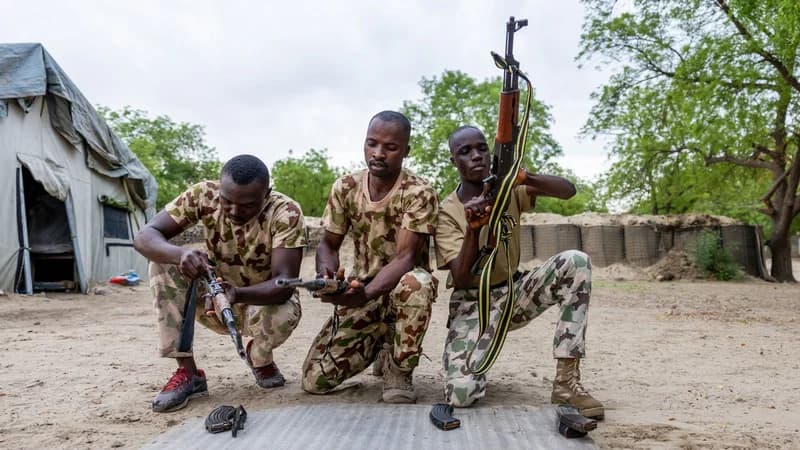
Nigerian President Bola Tinubu has approved the largest military expansion in the country's recent history, a strategic move designed to quell a wave of escalating violence across the nation. The expansion involves the recruitment of 28,000 new soldiers and the creation of four additional army divisions, increasing the total from eight to twelve. This massive restructuring is aimed at bolstering national and border security in response to persistent threats from militant Islamist groups, regional separatists, and criminal gangs that have increasingly targeted civilians and state infrastructure.
To support this influx of personnel, the administration plans to establish new operational hubs in key locations, including Makurdi, Ilorin, Jalingo, and Benin City. These centers, expected to be fully operational by late 2026, are intended to improve military coordination and drastically reduce response times in conflict-prone areas. The urgency of this overhaul has been underscored by several recent tragedies, including a brutal massacre of villagers in Zamfara state and high-profile mass kidnappings of students in Borno and Oyo states. By decentralizing command and increasing boots on the ground, the government hopes to regain control over territories where non-state actors currently operate with relative impunity.
The military expansion is part of a broader, multi-faceted security strategy that includes the recruitment of over 50,000 new police officers and a significant increase in the national defense budget. President Tinubu has also emphasized the need for international cooperation, particularly in addressing the growing influence of the Islamic State and other extremist groups within the sub-Saharan region. During the announcement, the presidency issued a stern warning to armed groups, urging them to surrender or face the full might of the restructured armed forces.
Despite the ambitious scope of the expansion, the Tinubu administration faces significant hurdles, particularly regarding recruitment. High casualty rates among soldiers in ongoing counter-insurgency operations have created a sense of hesitation among the youth. Security experts have also cautioned that a purely military solution may be insufficient to ensure long-term stability. They stress that for the expansion to yield lasting results, it must be accompanied by comprehensive socioeconomic investments and community-level engagement to address the root causes of radicalization and crime. As the phased rollout continues through 2026, the success of this initiative will likely depend on the government’s ability to balance military force with the development of stable, prosperous communities.