Ghana News AI
HomeBriefsAsk GhanaTopicsTools
•
•

Stay Informed

Get AI-curated news briefs from Ghana delivered to your inbox every morning. Free forever, no spam.

Explore

  • Home
  • Briefs
  • About

Categories

  • Politics
  • Business
  • Sports
  • Entertainment
  • Africa

Features

  • Analysis
  • Cedi Rates
  • Dollar to Cedi
  • Ghana Gold Price
  • BoG Policy Rate

Topics

  • Armed Forces Recruitment
  • WAEC Results & News
  • Nana Ama McBrown
  • NDC News
  • All Topics

Legal

  • Privacy Policy
  • Terms of Service
Ghana News AI© 2026. All rights reserved.
Made withfor Ghana
news

UNODC World Drug Report 2024: Global Surge in Synthetic Drugs and Methamphetamine Poses Growing Threat to Africa

26th June•2 min read•1 source
UNODC World Drug Report 2024: Global Surge in Synthetic Drugs and Methamphetamine Poses Growing Threat to Africa
  1. Home
  2. /News
  3. /UNODC World Drug Report 2024: Global Surge in Synthetic Drugs and Methamphetamine Poses Growing Threat to Africa

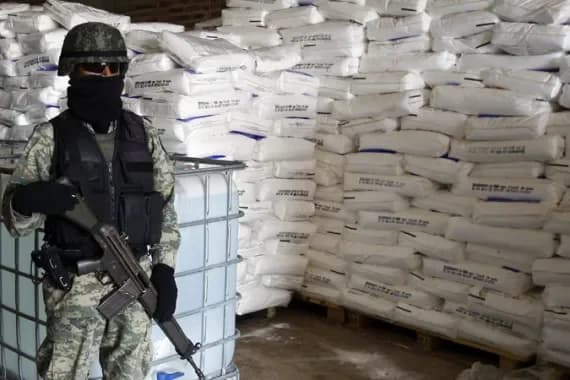
The United Nations Office on Drugs and Crime (UNODC) has issued a stark warning in its World Drug Report 2024, highlighting a dramatic surge in the global drug trade. The report reveals a significant rise in the production and trafficking of synthetic drugs, cocaine, and methamphetamine, as criminal networks prove increasingly adept at navigating changing geopolitical landscapes and market demands. This trend is particularly concerning as traffickers adapt to major shifts, including the Taliban's ban on heroin production in Afghanistan, which has forced a pivot toward other lucrative illegal substances.

The UNODC report documents a staggering fivefold increase in the variety of drug types available since 2020, with 755 new psychoactive substances identified globally. This diversification of the illegal market introduces unprecedented risks to public health, especially with the emergence of highly potent synthetic opioids. These substances are often deadlier and more difficult to regulate than traditional plant-based drugs. The adaptability of traffickers is further evidenced by the shifting dynamics in the Middle East, where instability in Syria is disrupting the Captagon market and potentially driving users toward more dangerous alternatives like methamphetamine.

Methamphetamine trafficking is currently experiencing a rapid expansion, growing at an annual rate of 13 percent. While once concentrated in specific regions, these markets are now aggressively expanding into Africa and Europe. The report underscores that the African continent is becoming a significant transit and consumption hub for these synthetic stimulants, posing a severe challenge to regional law enforcement and healthcare systems. The convergence of new production techniques and expanded distribution networks means that high-purity synthetic drugs are becoming more accessible to a wider demographic of users than ever before.

The implications of this report suggest a critical need for enhanced international cooperation and proactive drug policy reforms. As synthetic drugs become easier to manufacture and harder to track, traditional interdiction methods must be supplemented with robust public health strategies and data-driven monitoring. The UNODC emphasizes that without a coordinated global response to curb the production and distribution of these new psychoactive substances, the burden on global health systems and the threat to societal stability will continue to escalate.

Our Take

From the Team

Coming Soon

Our team will add key insights, trends, and actionable takeaways to help you stay informed faster.

This story touches markets covered on Anansi Intelligence ↗.

More from news

Continue exploring similar stories

UK Deputy High Commissioner Emphasizes Ethical Journalism as Foundation for Democracy at GJA 77th Anniversary
news|19th August

UK Deputy High Commissioner Emphasizes Ethical Journalism as Foundation for Democracy at GJA 77th Anniversary

Chris Halliday, the Deputy British High Commissioner to Ghana, has underscored the critical role of ethical journalism in sustaining a robust and resilient democracy. Speaking at the 77th Anniversary Symposium of the Ghana Journalists Association (GJA) in Accra, Halliday emphasized that the media's commitment to accuracy and integrity serves as the bedrock of democratic governance, especially in an era defined by rapid technological shifts and the proliferation of misinformation. Addressing the evolving media landscape, the Deputy High Commissioner warned that the manipulation of information often poses a more significant threat to democratic stability than direct censorship. He noted that while technological advancements offer new avenues for communication, they also present challenges that demand a higher standard of journalistic ethics. Halliday urged practitioners to safeguard the public's right to truthful information, asserting that a free and independent press is non-negotiable for any society seeking to maintain transparency and accountability. Beyond the theoretical importance of media freedom, the symposium highlighted the practical necessity for journalists to continuously upgrade their professional skills. Halliday called on members of the GJA to adapt to the changing digital environment to remain effective gatekeepers of information. He further reiterated the United Kingdom’s ongoing commitment to supporting press freedom in Ghana, viewing it as a vital partnership aimed at strengthening the country’s democratic institutions against the rising tide of disinformation. The GJA’s 77th-anniversary milestone serves as a reflective period for the Ghanaian media fraternity to evaluate its impact on national development. As Ghana continues to navigate complex political and social terrains, the call for ethical steadfastness remains paramount. The discussions at the symposium suggest that the future of Ghana's democracy is intrinsically linked to the ability of its journalists to balance speed with accuracy and innovation with traditional ethical principles.

Man, 20, drowns while helping travellers cross Ghana-Togo border river
news|19th August

Search Intensifies for 20-Year-Old Man Drowned While Assisting Travellers Across Ghana-Togo Border River

A tragic incident has occurred in the Upper East Region where a 20-year-old man, Kombat Yaw Yiremiah, drowned while assisting travellers in crossing a river that separates Ghana and Togo. The event, which took place on August 16, 2026, has left the local community in a state of mourning and distress. Yiremiah was reportedly acting as a guide and helper for individuals navigating the waterway when he was swept away, highlighting the perilous conditions often faced at informal border crossing points between the two West African nations. Following the disappearance, a joint search operation was launched involving the National Disaster Management Organisation (NADMO) and dedicated local community members. Despite these ongoing efforts, the young man's body has yet to be recovered. The search teams have been working tirelessly under difficult conditions, prompting community leaders to issue urgent appeals for professional aquatic support and specialized diving equipment to bolster the recovery mission. The lack of immediate technical resources in the remote border area has complicated the search process significantly. In tandem with the physical search, the community has also engaged in traditional consultations and customary rites, a practice frequently employed in rural Ghanaian settings during such tragedies to seek spiritual guidance in locating the missing. This multifaceted approach reflects the cultural significance of proper recovery and burial rites in the region. Local residents have described Yiremiah as a helpful individual, and his loss is deeply felt by both his family and the travellers he sought to assist. This drowning incident underscores the critical need for improved infrastructure and safer transit routes in border communities. While the government under President John Mahama continues to address national development priorities, this tragedy brings into focus the vulnerabilities of citizens living in remote areas who rely on informal crossings for trade and movement. As the search efforts enter their next phase, the focus remains on bringing closure to the grieving family and evaluating measures to prevent similar occurrences in the future.

Egypt National Coach Hossam Hassan Collapses Amidst Family Dispute as Global Reports of Targeted Violence Rise
news|19th August

Egypt National Coach Hossam Hassan Collapses Amidst Family Dispute as Global Reports of Targeted Violence Rise

The Egyptian sports community and international observers were recently shaken by reports concerning Egypt national team coach Hossam Hassan, who reportedly collapsed following a domestic confrontation. The incident occurred at a hotel in Porto Marina on Egypt’s North Coast, where a physical brawl broke out between Hassan’s two wives, Howaida El-Gharbawy and Dina Mostafa. The heated argument reportedly escalated until the coach suffered a physical collapse, prompting immediate concerns for his health and the potential impact on his leadership of the national team. Beyond the sports world, separate incidents of physical violence have sparked outcry in both the United Kingdom and Ghana. In North London, a Muslim woman wearing a hijab was attacked near a bus stop in Edmonton. Video footage revealed a man punching the woman in an unprovoked assault until a bystander intervened. While the suspect was detained by police, the attack has fueled anxieties regarding a surge in anti-Muslim sentiment and the safety of women in public spaces. Meanwhile, in Kumasi’s commercial hub of Adum, a young man was subjected to a mob assault after allegedly being caught stealing from a local shop. Footage of the encounter showed a group of men dragging the suspect before he eventually escaped, highlighting ongoing concerns regarding the prevalence of "instant justice" and the role of local security. Complementing these reports of physical altercations are accounts of emotional and financial exploitation within personal relationships. A 45-year-old individual recently shared a harrowing account of a year-long online relationship that culminated in a significant financial scam, illustrating the persistent dangers of digital dating and social engineering. Collectively, these events highlight a troubling landscape of domestic volatility, hate-motivated crimes, and criminal exploitation. As public discussions continue, there is a heightened call for improved security measures, communal tolerance, and the prioritization of formal legal channels over physical confrontation.

COMAC Uncovers Hazardous Safety Violations at Fuel Retail Outlets Across Northern Ghana
news|19th August

COMAC Uncovers Hazardous Safety Violations at Fuel Retail Outlets Across Northern Ghana

The Chamber of Oil Marketing Companies (COMAC) has sounded a stern warning regarding persistent safety standard violations at fuel retail outlets in northern Ghana. Following a recent mystery shopping exercise conducted across the region, the organization revealed a shocking level of non-compliance among both motorists and station attendants. Dr. Riverson Oppong, the Chief Executive Officer of COMAC, expressed deep concern over the flagrant disregard for basic safety protocols, which poses significant risks of fire outbreaks and environmental hazards in these operational areas. During the assessment, COMAC investigators documented several alarming practices that have become commonplace at these stations. Key among the violations was the practice of motorists refueling their motorcycles while still mounted, a high-risk behavior that can lead to catastrophic accidents if fuel spills onto a hot engine. The exercise also uncovered the widespread use of inappropriate containers, such as plastic bottles, for transporting fuel. In one particularly harrowing instance, a father and his young son were observed refueling a motorcycle in an entirely unsafe manner, illustrating a lack of public awareness regarding the volatility of petroleum products. Beyond consumer behavior, the mystery shopping exercise also scrutinized the technical and operational standards of the fuel stations themselves. The COMAC compliance and operations team evaluated the functionality of Automatic Tank Gauging (ATG) systems, which are critical for monitoring fuel levels and detecting leaks. The findings suggested that many outlets are facing ongoing challenges with these systems, potentially compromising the accuracy of inventory management and the early detection of underground environmental threats. In response to these findings, COMAC has announced plans to compile a comprehensive report detailing the observed lapses. This document will be shared with the Chamber's member companies and the National Petroleum Authority (NPA) to facilitate a coordinated effort to enforce stricter safety measures. By collaborating with the industry regulator, COMAC aims to implement enhanced training for station staff and launch public education campaigns to ensure that safety remains the paramount priority at fuel retail points across the northern regions.

All
africa
business
education
entertainment
health
news
politics
sports
technology