••
US Federal Court Reverses Immigrant Visa Ban Affecting Ghana as Global Trade and Peace Negotiations Intensify
•3 min read•7 sources
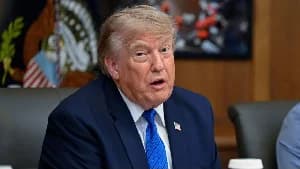
In a significant legal victory for international travelers and human rights advocates, U.S. District Judge Jeannette Vargas has struck down a Trump administration policy that suspended immigrant visa processing for 75 nations, including Ghana and 25 other African countries. The ruling, delivered in the Southern District of New York, described the suspension as "patently unlawful" and an overreach of executive authority. The court found that the policy violated federal immigration law by prohibiting visas based primarily on nationality. While the U.S. State Department had justified the ban by citing potential "public charge risks," the court's decision effectively reinstates the visa process, providing relief to thousands of applicants across Africa, Latin America, and South Asia.
Simultaneously, North American diplomatic relations have entered a period of high tension as Canadian Prime Minister Mark Carney suspended trade negotiations with President Donald Trump. Carney denounced recent U.S. tariffs on Canadian goods as a "miscalculation" intended to provoke division, asserting that Canada would defend its economic sovereignty with dollar-for-dollar retaliatory tariffs on steel, dairy, and other products starting September 8. The collapse of these talks has already resulted in a 78% decline in U.S. wine exports to Canada and has raised serious concerns regarding the long-term stability of the U.S.-Mexico-Canada Agreement (USMCA).
On the African continent, progress is being made toward regional stability and historical justice. In Switzerland, the Democratic Republic of Congo (DRC) and the M23-led rebel alliance reached a new roadmap for peace negotiations aimed at ending the protracted conflict in the country's mineral-rich eastern regions. The agreement includes specific timelines for a ceasefire and the establishment of a verification mission in South Kivu to monitor adherence to the terms. This diplomatic breakthrough follows a framework established in Doha and underscores a renewed commitment to resolving internal displacement and security threats through structured dialogue.
Furthering Africa's diplomatic agenda, Ghana’s Foreign Affairs Minister Samuel Okudzeto Ablakwa clarified the objectives of the continent’s reparatory justice campaign during a recent address in Moscow. Ablakwa emphasized that the movement is not merely a request for cash payments but a call for meaningful policy support and investment in African youth to address the lasting scars of the transatlantic slave trade. Acknowledging the UN resolution that defined the slave trade as a crime against humanity, Ablakwa highlighted Ghana’s leadership in advocating for historical corrections that empower the continent's future generations. Together, these global developments illustrate a complex landscape of legal challenges, shifting trade alliances, and a proactive pursuit of peace and justice.
Live rates
Dollar to cedi rate →