••
Zelenskyy Overhauls Military Command Amid Protests as Global Powers Navigate AI Rivalry and Trade Tensions
•3 min read•21 sources
In a period of significant geopolitical realignment, Ukrainian President Volodymyr Zelenskyy has dismissed Army Commander-in-Chief General Oleksandr Syrskyi following intense public protests in Kyiv. The unrest was triggered by the earlier removal of popular Defense Minister Mykhailo Fedorov, exposing a deep-seated leadership crisis within the wartime government. The friction centers on a strategic divide between Fedorov’s push for military modernization and Syrskyi’s reliance on traditional tactics. General Mykhailo Drapatyi has been appointed as the new Army Chief, tasked with unifying the defense strategy as the nation faces continued external aggression and internal demands for reform. Simultaneously, the European Union is negotiating its 21st sanctions package against Russia, targeting 94 financial institutions to further cripple Moscow’s economy, though Greece remains a holdout over concerns regarding Russian liquefied natural gas (LNG) restrictions.
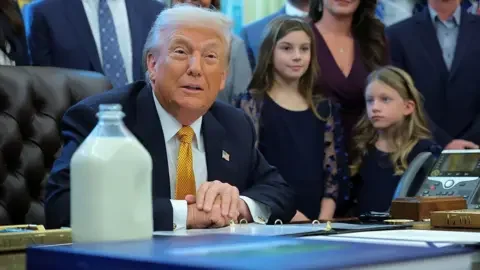
In North America and Asia, the United States is managing a complex web of trade and technological confrontations. Under President Donald Trump, the U.S. has intensified trade pressure on Canada, specifically targeting its dairy supply management system and prompting Canada to cancel a joint celebration for the Gordie Howe International Bridge. On the technological front, the U.S. and China are scheduled for high-level talks in September to address the risks of artificial intelligence, including military use and cyber threats. This follows serious allegations from a White House adviser that China’s Moonshot AI illegally distilled capabilities from U.S. models like Anthropic’s Fable AI. Amidst these tensions, the U.S. House of Representatives passed a $1.15 trillion defense bill, reflecting a massive commitment to military readiness despite partisan divisions over costs and Middle Eastern entanglements.
The Middle East and Africa are also witnessing shifts in long-standing political dynamics. The U.S. has signed a landmark nuclear cooperation deal with Saudi Arabia, allowing for a civilian nuclear program that American companies will support, though the move has raised proliferation concerns in Congress. In Africa, the Democratic Republic of the Congo's C64 opposition coalition has temporarily postponed mass protests against President Tshisekedi to allow for a church-mediated national dialogue. Meanwhile, Burkina Faso’s military leader Ibrahim Traore has dismissed rumors of internal power struggles within his junta, and a court in Angola has sentenced two Russian nationals for espionage and attempts to influence the country’s elections. In South Africa, mining tycoon Patrice Motsepe has ruled out a presidential bid, affirming his commitment to the Confederation of African Football (CAF).
Other notable developments include Moldova’s parliament electing finance expert Vasile Tofan as Prime Minister to stabilize the government following a series of scandals. In Western Europe, France has become the first EU nation to pass a law banning social media for children under 15, citing mental health and safety risks. On the legal front, Kenyan lawyers have launched a nationwide strike to protest systemic judicial corruption and case delays, while in the U.S., New York City Mayor Zohran Mamdani retracted a pledge to arrest Israeli Prime Minister Benjamin Netanyahu during his upcoming UN visit, citing a lack of local authority. These diverse events underscore a global landscape increasingly defined by leadership transitions, the regulation of emerging technologies, and the hardening of international trade and security alliances.
