••
24-Hour Economy Secretariat Secures $270m Poultry Deal as COCOBOD Returns to Profitability
•3 min read•9 sources
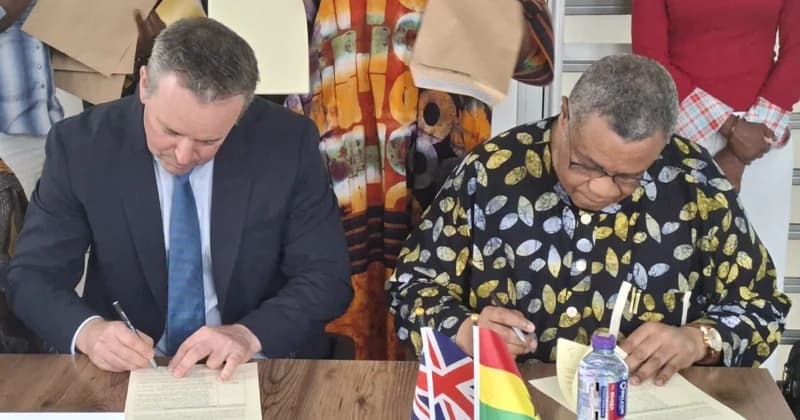
The 24-Hour Economy and Accelerated Export Development Secretariat has finalized a landmark US$270 million agreement to revitalize Ghana’s poultry sector, marking a significant step in President John Mahama’s industrialization agenda. The National Poultry Transformation Programme, which represents the largest UK agrifood investment in Ghana’s history, was signed alongside partners including Agrium Capital, Petra Trust, Axis Pension Trust, and Ghana EXIM Bank. This initiative aims to establish a fully integrated value chain—covering feed production, hatcheries, and processing facilities—to reduce the nation’s annual $400 million chicken import bill. The project is expected to create 12,000 direct jobs and scale production from 20,000 to 50,000 tonnes of processed poultry products annually, supporting the government's broader 24-Hour Economy vision.
Complementing these agricultural investments, the National Coordinator for the 24-Hour Economy Secretariat, Mr. Goosie Tanoh, announced plans to develop a 150-acre air cargo hub at the Tamale International Airport. This hub is designed to serve as a critical logistics gateway for northern Ghana, facilitating the direct export of high-value agricultural commodities to international markets. The integrated system aims to unify production, logistics, and energy, with proposed infrastructure including a solar power plant to boost productivity. Chief of Staff Dr. Julius Debrah further reinforced this push for local development by challenging the Greenhouse Group to ensure its large-scale investments in modern forestry and agriculture translate into tangible skills and job opportunities for Ghanaians across the value chain.
Amidst these sectoral expansions, the Ghana Cocoa Board (COCOBOD) has recorded a significant financial turnaround, posting a net profit of GH₵5.11 billion for 2025. This recovery follows a GH₵5.73 billion loss in the previous year and was driven by a 207% surge in operating revenue and a 33% increase in cocoa purchases. The board's return to profitability is attributed to robust growth in both export and domestic sales, alongside new sustainability initiatives aimed at enhancing crop resilience against climate change. This fiscal rebound provides a stable foundation for the state’s agricultural regulator as the government seeks to diversify the nation's commodity exports.
However, industry experts and economic analysts warn that structural gaps remain, particularly in value addition and MSME support. Ghana currently processes less than six percent of its 262,000 metric tonnes of annual cashew production, losing significant revenue to competitors like C"te d’Ivoire, which is on track to process 50-60% of its output locally by 2030. Furthermore, while MSMEs account for 80% of the workforce, Medium-sized enterprises often lack the targeted financing and digital infrastructure needed to scale. Bridging this "missing middle" through data-driven lending and formalized operations will be essential to ensuring that large-scale investments like the poultry and cargo hub projects result in a resilient, industrialised economy.
Related topic
John Mahama: Latest News & Updates →

