••
Sustainable Solutions and Advocacy: Africa Confronts Climate Challenges and Environmental Degradation
•2 min read•7 sources
Africa is at a critical juncture in its climate journey, balancing the urgent need for international support with grassroots environmental protection. Ghana’s Minister of State for Climate Change and Sustainability, Seidu Issifu, recently called on African negotiators to resist additional climate obligations unless developed nations provide predictable finance and technology transfer. This high-level advocacy comes as local communities across the continent grapple with the immediate impacts of climate change, from dwindling fish stocks in the White Volta to the loss of forest cover due to illegal activities. The push for equity at international summits like COP31 and COP32 remains central to Africa’s strategy in ensuring adaptation efforts are adequately funded.
The human cost of environmental change is starkly visible in the fishing industry along the White Volta, where fishermen are reporting drastic reductions in catches caused by erratic rainfall, pollution from agricultural chemicals, and shifting migration patterns. This decline has forced many to abandon their traditional livelihoods for farming, raising concerns about regional food security and health risks like malnutrition. Simultaneously, Ghana is intensifying its efforts to protect its natural resources through more rigorous enforcement. The Forestry Commission has recently partnered with the Jungle Warfare School to provide military training to 80 youth forest champions, who will be deployed to combat illegal mining and logging in critical reserves.
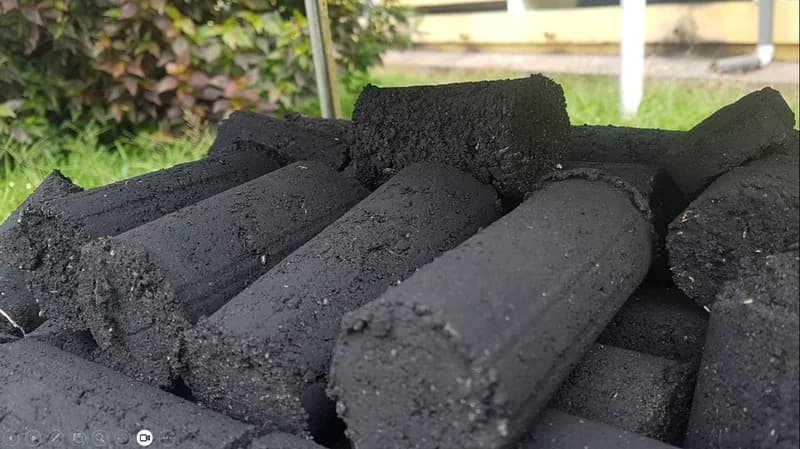
Despite these challenges, innovative solutions are emerging from the private sector and academia to mitigate environmental harm. Startups like Bidigreen Ghana Limited are revolutionizing the energy sector by transforming agricultural waste—such as coconut husks and corn cobs—into smokeless, clean charcoal. This shift addresses the dual problems of deforestation and indoor air pollution, which affects the 76% of Ghanaian households still reliant on traditional firewood and charcoal. In the academic sphere, the University of Mines and Technology (UMaT) has established a 34-acre arboretum to enhance research in land reclamation and forestry, signaling a commitment to long-term environmental restoration and the development of sustainable academic programs.
Furthering the push for long-term sustainability, initiatives like Sustain-A-Bean’s Live Systems Lab are embedding international students in cocoa-growing communities to address value-chain challenges and farmer income diversification. By focusing on community-led development and systems-based solutions, these programs aim to create global learning hubs that foster economic resilience and improve community health. Collectively, these efforts—from ministerial advocacy to local innovation and structured environmental protection—underscore a unified strategy to secure a sustainable, equitable, and resilient future for the continent.