••
Alex Bram urges professionals to adapt business models for AI era
•2 min read•1 source
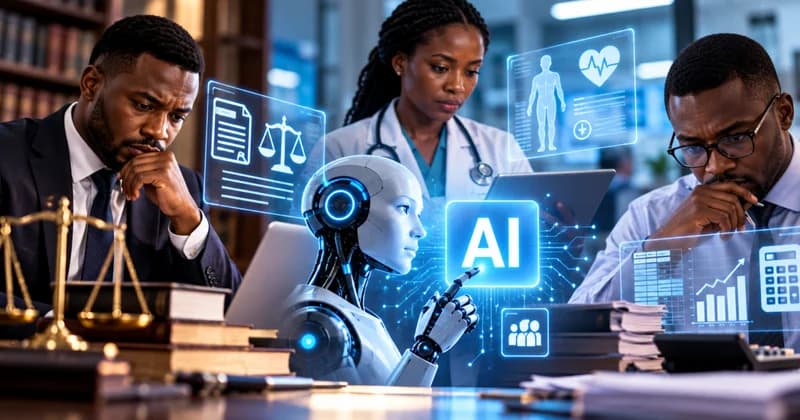
Hubtel Chief Executive Officer Alex Bram has called on professionals, including lawyers, doctors, and accountants, to evolve their service delivery models as artificial intelligence (AI) democratizes access to specialized knowledge. Speaking on the impact of emerging technologies, Bram emphasized that the rise of AI tools is fundamentally reshaping client expectations and the traditional value propositions of highly skilled industries. He argued that professionals must now pivot toward the specific value and outcomes they provide to clients rather than the routine tasks that AI can now perform.
Bram suggested that instead of viewing AI as a threat that eliminates professions, practitioners should see it as a catalyst for innovation and a tool to enhance productivity. For instance, he noted that legal professionals might transition from drafting basic documents to providing high-level strategic reviews, while medical practitioners should focus more on improving patient outcomes as health information becomes more readily available to the public through AI platforms. This shift requires a fundamental rethinking of how expertise is packaged and sold in a competitive market.
Demonstrating this transition in practice, Hubtel has already integrated AI into its own corporate structure. The company has established a dedicated AI laboratory and restructured its internal operations to improve efficiency and service delivery. Bram highlighted these internal changes as a necessary response to the shifting technological landscape, urging other Ghanaian business leaders and professional bodies to proactively adopt similar innovations to maintain their relevance.
Ultimately, the Hubtel CEO expressed optimism about the future, noting that the disruption caused by AI presents significant opportunities for growth for those willing to adapt. By focusing on the unique human elements of professional service—such as nuanced judgment, empathy, and complex problem-solving—professionals can increase their overall service value. He concluded that embracing these changes is essential for ensuring that specialized industries remain competitive as AI becomes more deeply integrated into the global economy.


