Ghana News AI
HomeBriefsAsk GhanaTopicsTools
•
•

Stay Informed

Get AI-curated news briefs from Ghana delivered to your inbox every morning. Free forever, no spam.

Explore

  • Home
  • Briefs
  • About

Categories

  • Politics
  • Business
  • Sports
  • Entertainment
  • Africa

Features

  • Analysis
  • Cedi Rates
  • Dollar to Cedi
  • Ghana Gold Price
  • BoG Policy Rate

Topics

  • Armed Forces Recruitment
  • WAEC Results & News
  • Nana Ama McBrown
  • NDC News
  • All Topics

Legal

  • Privacy Policy
  • Terms of Service
Ghana News AI© 2026. All rights reserved.
Made withfor Ghana
business

Ghana’s Economic Landscape: Industrial Growth, SME Empowerment, and Agricultural Shifts Drive Development

13th April•3 min read•14 sources
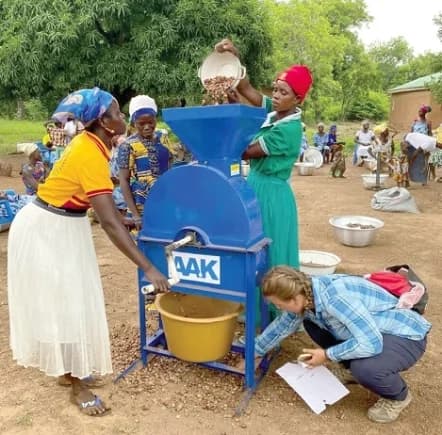
The AAK enterprise has come as a major intervention for women empowerment
  1. Home
  2. /Business
  3. /Ghana’s Economic Landscape: Industrial Growth, SME Empowerment, and Agricultural Shifts Drive Development

Ghana’s business environment is experiencing a significant shift as the nation balances industrial expansion with a concerted effort to empower small and medium enterprises (SMEs) and address sector-specific challenges. A major milestone in industrialization was reached through a landmark Memorandum of Understanding between the Ministry of Food and Agriculture and the Sentuo Group Limited. This partnership aims to establish agro-processing facilities and a national fertilizer manufacturing plant, signaling a move from raw commodity exports toward a robust agro-industrial economy. This progress is mirrored in the maritime sector, where the Tema Shipyard and Drydock Limited has reported a remarkable 55% revenue growth under the leadership of CEO Alhaji Osman Sulemana, transforming the facility into a modern maritime hub. Additionally, the real estate sector received a boost with the launch of the Prime Accra project by KASA Properties, which is expected to reshape the capital's skyline and create numerous urban development opportunities.

While large-scale projects drive national infrastructure, financial institutions and educational bodies are focusing on the backbone of the economy: local enterprises and talent. Republic Bank (Ghana) PLC recently reaffirmed its commitment to scaling up local businesses following the Kwahu Business Forum, emphasizing the need for a supportive ecosystem for maturing firms. Similarly, Stanbic Bank Ghana, in collaboration with PrymeAds, has launched a digital skills training program through its Business Incubator to equip SMEs with essential marketing and data analytics tools. These efforts are complemented by academic initiatives, such as the African University of Communication and Business (AUCB) providing practical business training to students and Fidelity Bank’s donation of 50 laptops to the University of Ghana, all aimed at bridging the digital and skills gap for the next generation of entrepreneurs.

In the agricultural and creative sectors, the narrative is one of both immense potential and urgent calls for intervention. Experts like Kwaku Boateng of the Coconut Federation of Ghana are advocating for increased investment in coconut production, citing its capacity to stabilize the economy and provide alternative livelihoods. This is echoed by the success of the Kolo Nafaso initiative, which has empowered over 250,000 women in the shea kernel sector through fair market access and pre-financing. However, a stark contrast is visible in the Shai Osudoku District, where rice farmers in Asutsuare are facing a financial crisis due to unsold produce and competition from imported rice. Farmers are calling for urgent government action on fair pricing and infrastructure to prevent further post-harvest losses and financial distress.

Ultimately, the sustainability of Ghana’s economic growth depends on a combination of strategic leadership and inclusive support systems. Leadership experts emphasize that clear accountability and reporting discipline are essential for CEOs to drive organizational performance. Furthermore, initiatives like the Ninani Group’s D.A. Twum Jnr. Fellowship are working to enhance talent quality in the creative and marketing sectors through structured mentorship. As Ghana Gas clears its name of procurement irregularity allegations and focuses on operational risk management, the broader business community remains focused on a dual-track strategy: leveraging large-scale industrial partnerships while ensuring that local SMEs and vulnerable agricultural sectors are provided the tools and market protections necessary to thrive in an increasingly competitive global environment.

Our Take

From the Team

Coming Soon

Our team will add key insights, trends, and actionable takeaways to help you stay informed faster.

This story touches markets covered on Anansi Intelligence ↗.

More from business

Continue exploring similar stories

Global Oil Prices Surge as US-Iran Tensions Threaten Middle East Supply and Strait of Hormuz Trade
business|Yesterday

Global Oil Prices Surge as US-Iran Tensions Threaten Middle East Supply and Strait of Hormuz Trade

Global oil markets are experiencing a second consecutive weekly rise as prices remained stable on Friday, driven by intensifying geopolitical tensions between the United States and Iran. Brent crude was trading at $93.82 per barrel, while West Texas Intermediate (WTI) stood at $86.78. The market's upward trajectory reflects deepening concerns over potential supply disruptions from the Middle East, a region critical to global energy security. Investors are closely monitoring the situation as the conflict continues to crimp output and unsettle international trade routes. The current volatility is largely attributed to the expiration of a peace deal between involved nations, which has heightened fears of significant production cuts from major oil producers. Since late February, the conflict has severely impacted the flow of global oil and gas, particularly through the Strait of Hormuz. Historically, this narrow waterway has served as a conduit for a substantial portion of the world's oil shipments, making any threat to its passage a major catalyst for price spikes. The breakdown of diplomatic efforts has left the market on edge, with supply chains increasingly vulnerable to the ongoing hostilities. Adding to the geopolitical complexity, U.S. President Donald Trump has issued warnings of economic repercussions against nations and entities providing support to Iran. This hardline stance suggests a further tightening of sanctions and potential long-term constraints on Iranian energy exports. As the international community watches for the next development in this high-stakes standoff, the global economy faces the prospect of sustained high energy costs. Analysts suggest that unless a new diplomatic framework is established, the pressure on global oil stocks will continue to drive market uncertainty in the coming weeks.

DVLA to Launch Nationwide Instant Printing of Renewed Driver’s Licences by October 2026
business|Yesterday

DVLA to Launch Nationwide Instant Printing of Renewed Driver’s Licences by October 2026

The Driver and Vehicle Licensing Authority (DVLA) has announced a major strategic shift aimed at eliminating chronic delays in the issuance of driver’s licences across Ghana. By the end of October 2026, the Authority plans to decentralise its printing operations, enabling regional and local offices nationwide to print renewed licences instantly. This initiative is expected to address long-standing grievances regarding the current centralized system, which has often resulted in applicants waiting for up to a year to receive their permanent plastic cards. According to the Chief Executive of the DVLA, Julius Neequaye Kotey, the decentralisation move is designed to enhance accessibility and operational efficiency. Currently, all licences are processed through a central hub, creating a significant bottleneck that hampers service delivery. By equipping individual DVLA offices with the capacity to print cards locally, the Authority intends to provide a more seamless experience for motorists, ensuring that renewed documentation is handed over immediately upon application. It is important to note that the instant printing service will primarily apply to the renewal of existing licences and the issuance of replacement cards for lost or damaged ones. The process for first-time applicants will remain distinct; new drivers will still be required to complete a mandatory three-month process, including training and testing, to ensure compliance with safety standards and international best practices. This distinction ensures that while administrative efficiency is improved for existing drivers, the integrity of the qualification process for new motorists is maintained. This modernization effort represents a significant step in the DVLA’s broader goal of meeting international standards and improving the ease of doing business within the transport sector. As the October 2026 rollout approaches, the Authority is expected to focus on upgrading the technological infrastructure at its various regional offices to support local printing. The transition is poised to reduce the reliance on temporary paper permits and provide Ghanaian drivers with a more reliable and professional licensing service.

Digital Innovation and Shifting Worker Priorities Redefine Ghana’s Business Landscape
business|Yesterday

Digital Innovation and Shifting Worker Priorities Redefine Ghana’s Business Landscape

Ghana’s business ecosystem is undergoing a significant transformation in 2026, fueled by a surge in digital integration and a fundamental shift in workforce expectations. Small and Medium-sized Enterprises (SMEs), which account for 60% of the nation’s GDP and over 90% of all businesses, are increasingly leveraging Information and Communication Technology (ICT) to overcome traditional barriers. With a financing gap estimated at $4.8 billion, the rise of mobile money and digital platforms is providing the Bank of Ghana with the transaction data necessary to establish formal credit histories for previously "unbankable" businesses. This digital evolution is further evidenced by the burgeoning video gaming and esports industry, which emerged as a $121 million opportunity last year, signaling a move toward more sophisticated digital value creation. Parallel to this technological shift is a change in the Ghanaian labor market's priorities. According to the 2026 Employee Motivation Survey Report (EMSR), job security and the pursuit of a "dream job" have overtaken salary as the primary motivators for workers. The report, conducted by Data Insight and partners, ranks career development, a safe work environment, and manager relationships among the top five factors for employee engagement, notably excluding financial compensation from the top tier. This trend was echoed at the recent HR Connect Conference, where Telecel Ghana HR Director Rachael Appenteng challenged practitioners to align workforce strategies with business outcomes, emphasizing that HR must master digital and analytical skills to remain relevant in a technology-driven economy. Capacity building and resilience have become central themes for Ghanaian entrepreneurs navigating this new reality. At the third MTN Masterclass Series in Accra, over 120 participants engaged with experts on thriving in a "digital-first" world, focusing on artificial intelligence and strategic partnerships. Complementing these practical skills is a push for a cultural shift in how failure is perceived; industry experts are advocating for failure to be viewed as an essential component of growth rather than a final outcome, encouraging entrepreneurs to take the necessary risks required for innovation and long-term success. The government is moving to support these developments through the National E-commerce Strategy and the MSME Digital Gateway, aiming to facilitate access to $6 billion in concessional loans. As stakeholders from both the private and public sectors converge, the focus is shifting from passive digital consumption to active innovation. By addressing digital literacy, infrastructure costs, and ethical workplace cultures—as highlighted by Minister Hon. Dr. Abdul-Rashid Hassan Pelpuo—Ghana is positioning its SME sector and youth to be competitive leaders in the global digital economy.

Gospel star Diana Hamilton joins Onga family as brand ambassador
business|Yesterday

Ghana's Cocoa Sector Transitions to 24-Hour Operations Under President Mahama as Promasidor Names Diana Hamilton Brand Ambassador

The Cocoa Marketing Company (Ghana) Limited (CMC) has taken a significant step toward transforming Ghana’s agricultural logistics by launching a new 24-hour operational model. This initiative, unveiled by Managing Director Wisdom Kofi Dogbey, is a direct implementation of President John Dramani Mahama’s 24-Hour Economy policy. The model is structured around three core pillars—Offload 24, Load 24, and Export 24—which are designed to eliminate the inefficiencies of traditional working hours. By allowing continuous operations, the CMC aims to improve truck turnaround times, support local processing, and better align Ghana’s cocoa export preparations with international shipping schedules, ultimately enhancing the nation’s competitiveness in the global market. In the consumer goods sector, Promasidor Ghana has further strengthened its market position by appointing celebrated gospel musician Diana Antwi Hamilton as the Brand Ambassador for Onga Tomato Mix. Commercial Director Abiodun Ayodeji noted that Hamilton’s persona and connection with Ghanaian families perfectly align with the brand’s values of warmth and quality. The Onga Tomato Mix product line is not only designed to enrich the flavor of local staples like Jollof rice and stews but is also fortified with essential nutrients including fiber, Vitamin A, Vitamin D, and Zinc. Hamilton expressed her enthusiasm for the partnership, citing her personal use of Onga products in her own kitchen as a testament to the brand’s reliability. Parallel to these economic and marketing advancements, corporate responsibility remains a focal point as QNET reaffirmed its commitment to ethical business practices and the fight against human trafficking. In a collaborative effort with the Economic and Organized Crime Office (EOCO) and INTERPOL, QNET supported the rescue and repatriation of 44 foreign nationals, including 33 individuals from Burkina Faso who had been victims of travel scams and fraudulent recruitment. This intervention followed a regional workshop aimed at equipping law enforcement with better tools to combat transnational organized crime. QNET continues to urge public vigilance against criminal networks that misuse corporate identities to exploit vulnerable job seekers. These diverse developments across the logistics, manufacturing, and service sectors signal a broader shift in Ghana’s business environment toward efficiency and ethical accountability. The transition of the cocoa sector to a 24-hour cycle is expected to set a precedent for other state-linked industries, while the high-profile branding and social responsibility initiatives of private firms like Promasidor and QNET demonstrate a multifaceted approach to growth. As the 24-hour economy policy takes root, stakeholders are being called upon to adapt their operational schedules to maximize the potential for nationwide economic expansion.

All
africa
business
education
entertainment
health
news
politics
sports
technology