Ghana News AI
HomeBriefsAsk GhanaTopicsTools
•
•

Stay Informed

Get AI-curated news briefs from Ghana delivered to your inbox every morning. Free forever, no spam.

Explore

  • Home
  • Briefs
  • About

Categories

  • Politics
  • Business
  • Sports
  • Entertainment
  • Africa

Features

  • Analysis
  • Cedi Rates
  • Dollar to Cedi
  • Ghana Gold Price
  • BoG Policy Rate

Topics

  • Armed Forces Recruitment
  • WAEC Results & News
  • Nana Ama McBrown
  • NDC News
  • All Topics

Legal

  • Privacy Policy
  • Terms of Service
Ghana News AI© 2026. All rights reserved.
Made withfor Ghana
health

Ghana Strengthens Health Sector Through Global Partnerships, Massive Screenings, and New Bilateral Agreements

31st May•3 min read•15 sources
Ghana Strengthens Health Sector Through Global Partnerships, Massive Screenings, and New Bilateral Agreements
  1. Home
  2. /Health
  3. /Ghana Strengthens Health Sector Through Global Partnerships, Massive Screenings, and New Bilateral Agreements

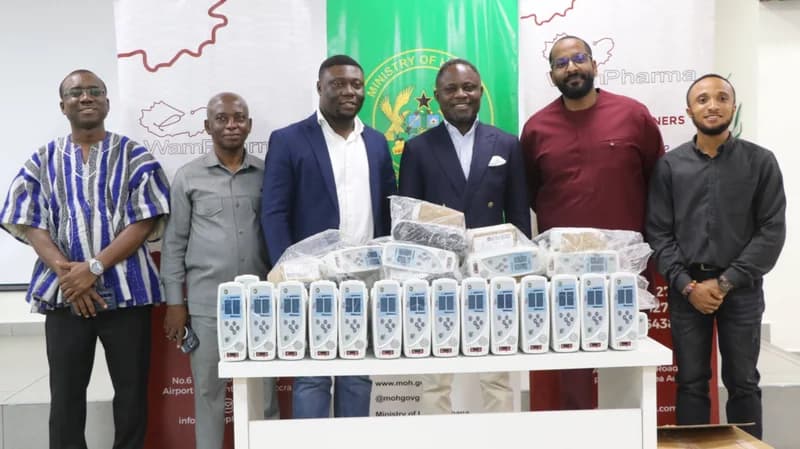
Ghana’s healthcare landscape is undergoing significant transformation through a series of international collaborations, infrastructure enhancements, and community-led interventions. A landmark bilateral agreement between Ghana and Jamaica will see the deployment of approximately 400 Ghanaian nurses to the Caribbean nation to bolster its healthcare system. This move, announced by Foreign Affairs Minister Samuel Okudzeto Ablakwa, follows the revitalization of the Ghana–Jamaica Permanent Joint Commission for Cooperation (PJCC) after 21 years of inactivity. The agreement highlights the growing global demand for Ghanaian medical expertise and encompasses broader cooperation in defense and tourism. Domestically, the Ministry of Health has received a major boost with a donation of advanced bedside pulse oximeters valued at over $100,000 from WAMPHARMA. Health Minister Kwabena Mintah Akandoh noted that the equipment, provided in collaboration with Masimo, will directly support the government’s Free Primary Healthcare initiative and significantly improve pediatric care outcomes nationwide.

At the community level, health authorities are intensifying efforts to promote early detection and preventive care. In the Ketu North Municipality, a partnership with Auburn University Outreach is facilitating a two-day free health screening at the Kuli CHPS Compound on June 2-3, 2026. The program offers comprehensive services, including blood pressure checks, blood sugar testing, and general medical consultations, with a specific focus on mothers and vulnerable populations. Meanwhile, a recent eye screening exercise in Wa conducted under the "Blissful Sight for Kids" project revealed a staggering statistic: of 1,123 schoolchildren screened, only 98 had normal vision. Dr. Zakarea Al-Hassan Balure and local authorities emphasized that the high prevalence of pathological conditions, refractive errors, and even cases of cataracts and glaucoma among students demands urgent and ongoing healthcare support to prevent long-term educational setbacks.

While infrastructure and screenings expand, medical professionals are also sounding the alarm on lifestyle-related health crises. Doctors at St. Martin’s Catholic Hospital in the Amansie South District have warned of a sharp rise in hypertension cases, which they attribute to the stress of mining activities, excessive consumption of energy drinks, and dangerous self-medication practices. They urged the public to reduce salt and sugar intake and seek regular medical checkups rather than over-the-counter remedies. These clinical concerns are being met with increased private philanthropy; for instance, Dr. Matthew Opoku Prempeh recently donated essential medical equipment to the children’s wards at Komfo Anokye Teaching Hospital (KATH), while advocate Safia Ayivor has called on the government to prioritize equipping polyclinics with anesthesia machines and surgical packs to reduce overcrowding in maternal health units.

These diverse developments—from the export of nursing talent to localized screening projects—underscore a multifaceted approach to improving Ghana's health indicators. The integration of international diplomatic deals with grassroots medical outreach and private-sector donations provides a roadmap for a more resilient national health system. Moving forward, the success of these initiatives will depend on the sustained maintenance of donated equipment, the continuous monitoring of schoolchildren’s vision health, and the effective management of the domestic nursing workforce as the country seeks to balance its international commitments with local healthcare demands.

Our Take

From the Team

Coming Soon

Our team will add key insights, trends, and actionable takeaways to help you stay informed faster.

This story touches markets covered on Anansi Intelligence ↗.

More from health

Continue exploring similar stories

Dr Caroline Reindorf-Amisah ( seated 2nd from right), Deputy Director-General, GHS; ZANU Dasah (seated left) Head, Legal,GHS, and  Dr. Gina Teddy (seated middle), member of GHS Council, with some participants and facilitators at the training programme
health|Yesterday

Ghana Health Service Warns of Rising Medical Lawsuits as MP Frank Annoh-Dompreh Joins Africa CDC Immunization Council

The Ghana Health Service (GHS) has raised a significant alarm over a sharp increase in legal actions against public health facilities, warning that the surge in litigation threatens both public funds and the overall integrity of the healthcare system. Speaking at a structured legal education program in Accra, GHS Deputy Director-General, Dr. Caroline Reindorf-Amissah, revealed that the number of lawsuits has more than doubled in recent years, climbing from 40 recorded cases in 2023 to 89 by October 2025. This trend has prompted the service to call for more rigorous adherence to medical protocols and better documentation to safeguard the sector's financial stability and reputation under the current administration. The financial implications of these legal battles are staggering, with current claims potentially costing the GHS an estimated GH¢400 million. Dr. Reindorf-Amissah highlighted a prominent case involving the late Charles Amissah, whose family filed a GH¢20 million lawsuit against multiple hospitals and healthcare professionals following a fatal accident. The GHS identifies inadequate documentation and procedural failures as the primary drivers behind these legal challenges. To counter this, the service is working to decentralize its legal services and establish standardized guidelines for managing medicolegal incidents, moving away from a defensive stance toward proactive quality assurance and improved patient care. While the domestic health sector grapples with administrative and legal hurdles, Ghanaian leadership continues to influence the continental stage. Frank Annoh-Dompreh, the Member of Parliament for Nsawam-Adoagyiri and Minority Chief Whip, has been appointed by the Africa CDC to the Continental Immunization Advisory Council (CIAC). In this capacity, Mr. Annoh-Dompreh is tasked with participating in high-level strategic discussions regarding Africa’s immunization priorities and the successful implementation of the Continental Immunization Strategy (CIS) 2026–2030. The Council aims to bring together leaders from various sectors to enhance immunization efforts and address systemic health challenges across the continent. The juxtaposition of these developments underscores a critical period for Ghanaian health policy. As the nation contributes to shaping Africa’s long-term immunization goals through the Africa CDC, the Ghana Health Service remains focused on internal reforms to restore public confidence. The successful execution of the 2026–2030 strategy will require the same level of administrative precision and transparency that health officials are now advocating for within local hospitals. Moving forward, the GHS aims to ensure that funds intended for improving healthcare services are not diverted to legal settlements, ensuring a more resilient and accountable health system for all citizens.

Dr Pennante Bruce-Vanderpuije
health|Yesterday

Chief of Staff Dr. Julius Debrah and CSIR-WRI Lead New Public Health and Safety Initiatives Across Ghana

Ghana is intensifying efforts to safeguard public health through a series of multi-sectoral interventions addressing environmental contamination, road safety, and infectious disease prevention. From the discovery of microplastic pollutants in local fish stocks to high-level advocacy for motorcycle safety and large-scale disinfection exercises in the Western Region, the government and scientific community are responding to emerging threats. These developments come as the administration of President John Mahama prioritizes the implementation of the Road Traffic (Amendment) Act of 2025 and seeks to harmonize environmental research with national policy to ensure the long-term wellbeing of the population. A landmark six-year study by the Council for Scientific and Industrial Research-Water Research Institute (CSIR-WRI) has raised alarms regarding microplastic levels in Ghanaian fish, particularly in coastal communities. Dr. Pennante Naa Ayikailey Bruce-Vanderpuije, presenting the findings, revealed that microplastic concentrations in certain areas far exceed international safety limits. The research estimates that Ghanaian children are exposed to approximately 209 microplastic particles annually, while consumers of wild freshwater fish face significantly higher risks, with exposure reaching up to 4,785 particles. These pollutants, traced back to agricultural runoff, urban sewage, and PVC materials, pose a direct threat to human health through the consumption of fish gills and guts. However, experts emphasized that the solution lies not in avoiding fish, but in urgent infrastructure improvements and stricter legislation to manage plastic waste and protect aquatic ecosystems. Parallel to environmental concerns, the government is tackling the rising tide of road traffic injuries. Speaking at the 2026 Safe African Helmets Initiative (SAHI) Summit, Chief of Staff Dr. Julius Debrah urged stakeholders to prioritize road safety, specifically focusing on the increasing use of motorcycles across the continent. Dr. Debrah highlighted the importance of the Road Traffic (Amendment) Act, 2025, as a cornerstone for enhancing rider protection. He called for a collaborative shift in responsibility where government agencies, transport operators, and the public work together to enforce proper helmet standards. By hosting the 2026 summit, Ghana aims to position itself as a regional leader in reducing motorcycle-related fatalities through better equipment quality and stricter regulatory compliance. On the front lines of disease prevention, Zoomlion Ghana Limited (ZGL) has launched a massive fumigation and disinfection exercise across all 16 Metropolitan, Municipal, and District Assemblies (MMDAs) in the Western Region. This initiative, part of the company’s Corporate Social Responsibility, specifically targets flood-affected areas to mitigate the risk of cholera, typhoid, and malaria outbreaks. The operation began in the Sekondi-Takoradi Metropolis and the Effia-Kwesimintsim Municipality, focusing on stagnant water bodies and public spaces that serve as breeding grounds for vectors. Local residents and officials have welcomed the exercise, noting its vital role in maintaining public hygiene and safety following recent environmental disruptions. Together, these initiatives represent a comprehensive approach to securing the wellbeing of Ghanaians in an era of rapid urbanization and environmental change. The synthesis of rigorous scientific research from the CSIR-WRI with the legislative and administrative push for road safety by the Chief of Staff underscores a policy direction focused on preventative health. As Ghana moves forward, the success of these programs will depend on the effective integration of waste management infrastructure, the enforcement of road safety laws, and sustained public awareness campaigns to ensure a healthier and safer environment for all citizens.

PharmaVax Ghana Awards ‐2m for Medical Research as Global Cancer Vaccine Breakthroughs Show Promise
health|Yesterday

PharmaVax Ghana Awards ‐2m for Medical Research as Global Cancer Vaccine Breakthroughs Show Promise

The landscape of medical research in Ghana and abroad is witnessing a significant transformation, marked by multi-million euro investments in local drug development and groundbreaking results in personalized cancer therapy. In Accra, the PharmaVax Ghana programme recently awarded ‐2 million in grants to eight research partnerships aimed at developing new vaccines and medicines for the local market. This surge in domestic research capacity coincides with international reports of a major breakthrough in skin cancer treatment, where a new mRNA vaccine has successfully prevented the recurrence of high-risk melanoma in clinical trials. The ‐2 million grant initiative, co-hosted by Ghana’s National Vaccine Institute and the German development agency GIZ, focuses on translating scientific discoveries into tangible health products. With additional contributions of ‐425,000 from Ghanaian partners, the projects will tackle critical health challenges including malaria treatments and the use of artificial intelligence for antibody discovery. Funded by the European Union and the German Federal Ministry for Economic Cooperation and Development, the initiative aims to provide both financial support and networking opportunities to ensure the commercialization of these health innovations within Ghana. On the global stage, the medical community is hailing a new personalized vaccine, Intismeran, developed by Merck and Moderna. In a study involving over 1,000 patients, the vaccine—when administered alongside the immunotherapy drug Keytruda—significantly extended cancer-free periods for those recovering from high-risk melanoma surgery. Utilizing mRNA technology similar to that used in COVID-19 vaccines, Intismeran is tailored to the specific genetic makeup of a patient’s tumor, representing a major leap forward in personalized medicine. While experts urge caution until full results undergo peer review, the trial’s success underscores the potential of targeted therapies to change the trajectory of cancer care. These parallel developments reflect a growing momentum towards specialized and localized healthcare solutions. For Ghana, the empowerment of the National Vaccine Institute under the current administration of President John Mahama signals a strategic shift toward pharmaceutical self-reliance and the ability to address endemic diseases through home-grown research. As global innovations like the melanoma vaccine move toward regulatory approval, the strengthening of Ghana’s own research infrastructure ensures the nation is well-positioned to both contribute to and benefit from the next generation of life-saving medical technologies.

'Gold cannot save you at 2am': GMTF Administrator challenges mining giants to invest in healthcare
health|Yesterday

GMTF Administrator Adjoa Darko-Opoku Challenges Mining Giants to Prioritize Healthcare Investment Over Infrastructure

Adjoa Obuobia Darko-Opoku, the Administrator of the Ghana Medical Trust Fund (GMTF), has issued a compelling call to the nation's mining industry to overhaul its approach to Corporate Social Responsibility (CSR). Speaking at the National Mining Dialogue 2026 in Accra, Darko-Opoku urged mining giants to pivot their investments away from traditional infrastructure projects like roads and schools toward more critical healthcare systems. She argued that while physical structures are visible markers of development, the true wealth of Ghana is contained within its human capital, which is currently underserved by existing medical facilities. The Administrator highlighted the findings of a recent nationwide healthcare assessment, which painted a grim picture of the state of medical access in Ghana. According to the report, there are severe and critical shortages of essential medical equipment across the country, particularly in regions where mining activities are most intensive. This assessment serves as a catalyst for her demand that mining companies rethink their social licenses and contribute directly to the construction and equipping of healthcare infrastructure that can provide immediate and life-saving care to community members. Emphasizing the urgency of the situation, Darko-Opoku used the poignant phrase, "Gold cannot save you at 2am," to illustrate the reality that financial wealth and natural resources are meaningless in the face of a medical emergency without adequate facilities. She challenged the mining industry to move beyond superficial contributions and instead create a lasting legacy by ensuring that the people living in their operational areas have access to quality health services. By redefining CSR to focus on health, companies can ensure a more resilient workforce and community. The GMTF’s appeal marks a significant shift in the dialogue surrounding extractive industries in Ghana. As the mining sector continues to be a cornerstone of the national economy, the call for a human-first investment strategy places the responsibility on corporations to safeguard the lives of those impacted by their operations. The proposed path forward involves a collaborative effort between the GMTF and mining stakeholders to identify specific equipment needs and develop a framework for sustainable healthcare investment that prioritizes human life over profit margins.

All
africa
business
education
entertainment
health
news
politics
sports
technology