••
Ghana’s Economic Outlook 2026: Public Debt Reaches GH¢674.1bn Amid IMF Transition and Strategic Reserve Building
•3 min read•17 sources
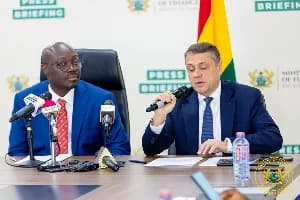
Ghana’s economic landscape in early 2026 is defined by significant fiscal milestones and a strategic shift in international financial engagement. As of February 2026, the nation’s public debt stock reached GH¢674.1 billion (US$63.1 billion), representing 42.2% of Gross Domestic Product (GDP). While the absolute debt figure increased from GH¢641.1 billion in late 2025, the debt-to-GDP ratio actually improved from 44.7% in December 2025, signaling a stabilization of the fiscal trajectory. This period also marks Ghana’s early exit from its US$3 billion Extended Credit Facility (ECF) with the International Monetary Fund (IMF). The government is now transitioning to a non-financial Policy Coordination Instrument (PCI), a move that banking consultants suggest reflects restored macroeconomic stability and a shift toward policy-anchored growth rather than emergency bailouts.
Despite these broader fiscal improvements, the Ghana cedi has faced renewed pressure, depreciating by approximately 8.4% against the US dollar in the interbank market during the first five months of 2026. By May 2026, the currency traded at GH¢11.41 to the dollar, compared to GH¢10.28 a year prior. This decline is largely attributed to sustained import demand and a cautious foreign exchange supply. In the financial markets, the secondary bond market saw a significant contraction, with turnover dropping by 67.7% to GH¢404.41 million. Investors have remained selective, focusing primarily on short-to-medium-term maturities as they await further policy guidance from the Bank of Ghana’s Monetary Policy Committee (MPC).
To strengthen the nation’s external buffers, the government has mandated large-scale gold miners to increase their annual output sales to the central bank from 20% to 30%. This initiative is part of an aggressive reserve-building strategy aimed at accumulating 157 tons of gold by 2028 to support currency stability. Parallel to this, the Bank of Ghana has announced a US$1 billion financing plan for the 2026/2027 cocoa season, sourced from the domestic bond market. This initiative, led by Governor Dr. Johnson Pandit Asiama, aims to reduce the country’s reliance on foreign borrowing and deepen local financing capabilities following fluctuations in global commodity prices.
However, the path toward economic consolidation remains vulnerable to external shocks and structural inefficiencies. The IMF and local experts have warned that rising global energy prices, exacerbated by geopolitical tensions in the Middle East, pose a significant risk to the inflation outlook. Furthermore, the IMF has urged the government to intensify reforms in the energy and cocoa sectors—specifically addressing operational gaps at the Electricity Company of Ghana—and to bridge anti-corruption loopholes to maintain investor confidence. As Ghana moves forward under the new PCI framework, the focus will remain on sustaining primary balance surpluses while ensuring that monetary policy effectively stimulates private sector credit growth.
Live rates
Bank of Ghana policy rate →
