••
Hyundai-KOICA NextGen Project Launched to Equip Ghanaian Youth with Electric Vehicle and Automotive TVET Skills
•2 min read•1 source
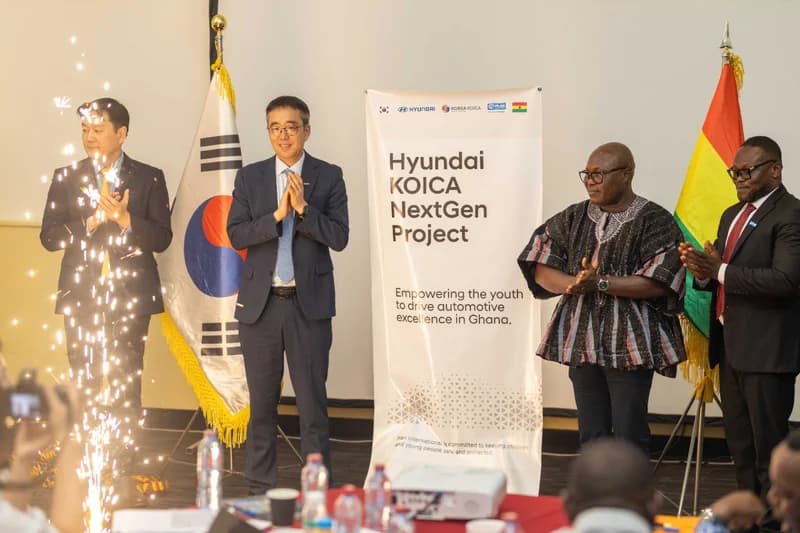
The Government of the Republic of Korea, in partnership with Hyundai Motor Company and Plan International, has officially launched the Hyundai-KOICA NextGen Project in Accra. This five-year initiative, scheduled to run from 2026 to 2030, is designed to revolutionize Ghana’s Technical and Vocational Education and Training (TVET) system by aligning it with the rapidly advancing global automotive industry. By providing young Ghanaians with industry-relevant skills, the project aims to address the growing demand for modern technical expertise while fostering sustainable economic growth and national development.
Central to the project's implementation is the modernization of TVET curricula, with a specific focus on emerging technologies such as electric and hybrid vehicles. To facilitate this, the initiative will establish 'Hubs of Excellence' and technology education centers in Accra and Ho. These facilities will provide students with state-of-the-art learning environments and practical exposure to the latest automotive advancements. Education Minister Haruna Iddrisu emphasized the necessity of these upgrades, noting that modernized training is essential for Ghanaian youth to remain competitive in a global market increasingly dominated by green technology.
The Hyundai-KOICA NextGen Project also places a strong emphasis on social equity, particularly regarding gender inclusion within the automotive sector. During the launch, Mr. Frederick Tei-Nobi of Plan International Ghana highlighted the importance of breaking traditional barriers and advocating for equal opportunities for women in automotive careers. By promoting gender-sensitive recruitment and training environments, the project seeks to ensure that the benefits of the growing automotive workforce are accessible to all talented young people, regardless of gender.
This new initiative redefines and expands upon the goals previously established under the Automotive Service Excellence and Youth Empowerment (ASEYE) Project. By combining the resources of the Korea International Cooperation Agency (KOICA), Hyundai’s industry leadership, and Plan International’s expertise in youth development, the NextGen Project is positioned to become a cornerstone of Ghana’s industrial workforce strategy. As implementation begins, the project is expected to significantly reduce youth unemployment and provide a steady pipeline of skilled technicians to support the country’s evolving automotive infrastructure.

