••
Parliament Vets President Mahama’s Nominees as James Agalga Succeeds Mahama Ayariga as Majority Leader
•3 min read•15 sources
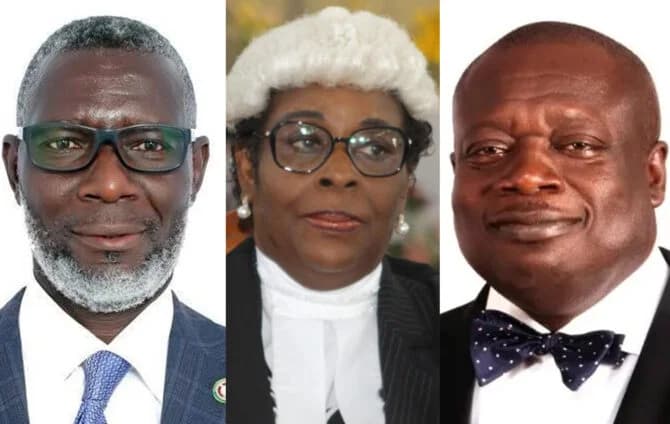
Ghana’s Parliament reconvened on August 24, 2026, for a high-stakes five-day emergency session to address a backlog of urgent government business following a recall by Speaker Alban Sumana Kingsford Bagbin. The recall, requested by President John Mahama, is primarily focused on the vetting of new ministerial and judicial nominees and the consideration of the Banks and Specialised Deposit-Taking Institutions (Amendment) Bill. This extraordinary sitting comes less than a month after the House adjourned in July, highlighting the administration's push to finalize key appointments and financial sector reforms during the President's second term.
A central development of the session was the formal transition of leadership within the Majority Caucus. The National Democratic Congress (NDC) officially appointed James Agalga, Member of Parliament for Builsa North, as the new Majority Leader, succeeding Mahama Ayariga. The transition was marked by a procedural clarification from Speaker Bagbin, who initially challenged President Mahama’s attempt to nominate Agalga directly. The Speaker emphasized that the authority to change parliamentary leadership rests with the political party and its caucus, not the Presidency. Following this, NDC General Secretary Fifi Kwetey submitted the required formal notification to the Speaker, ensuring the appointment adhered to established parliamentary standing orders.
The Appointments Committee has launched a rigorous vetting schedule, beginning with Mahama Ayariga, now the Minister-designate for Local Government, Chieftaincy and Religious Affairs, and Dr. Zanetor Agyeman-Rawlings, the nominee for the Ministry of Environment, Science and Technology. Additionally, the committee is reviewing three presidential nominations for the Supreme Court: Justice Sophia Rosetta Bernasko-Essah, Justice Edward Amoako Asante, and Anthony Forson Jr., a former President of the Ghana Bar Association. These nominations followed recommendations from the Judicial Council and advice from the Council of State, in accordance with Article 144(2) of the 1992 Constitution.
Amidst these proceedings, outgoing Majority Leader Mahama Ayariga delivered a pointed caution to his colleagues, urging Members of Parliament to refrain from using their offices to shield politicians from criminal prosecution. Under the theme "Crime is Crime," Ayariga warned that politicizing law enforcement actions or intimidating investigators undermines the rule of law and creates a double standard between officials and ordinary citizens. He called for absolute respect for judicial independence and the prompt hearing of cases to ensure fairness in the legal process.
Despite the busy agenda, the Minority Caucus has expressed significant frustration over the efficiency of the recall. Minority Chief Whip Frank Annoh-Dompreh criticized the early adjournment of the first day’s sitting after only two hours, accusing the Majority of being unprepared to deliberate on the critical Banks and Specialised Deposit-Taking Amendment Bill. The Minority emphasized that the emergency recall, which concludes on August 28, must be used effectively to address the financial stability measures and legislative items that justified the interruption of the parliamentary recess.
Related topic
NDC (National Democratic Congress): Latest News →

