••
President Mahama Swears in Key Ministers and Supreme Court Justices Amid Parliamentary Leadership Shift
•3 min read•32 sources
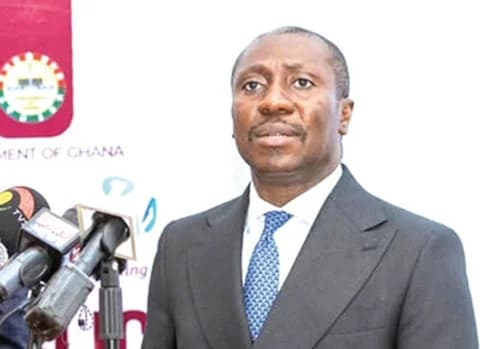
President John Dramani Mahama has officially sworn in two new cabinet ministers and three Supreme Court justices during a ceremony at Jubilee House on August 29, 2026. Mahama Ayariga has assumed the role of Minister for Local Government, Chieftaincy and Religious Affairs, while Dr. Zanetor Agyeman-Rawlings was sworn in as the Minister for Environment, Science and Technology. The ceremony also marked the induction of Justice Edward Amoako Asante, Justice Sophia Rosetta Bernasko Essah, and Anthony Forson Jnr to the Supreme Court bench. President Mahama charged the new officials to uphold the principles of integrity, transparency, and accountability, reminding them that public office is a privilege aimed at serving the national interest.
The appointments come alongside a significant transition in parliamentary leadership, as James Agalga, Member of Parliament for Builsa North, succeeds Mahama Ayariga as the new Majority Leader. In his acceptance speech, Agalga pledged a leadership style rooted in consensus-building and collaboration with the Minority Caucus to advance the government's legislative agenda. Minority Leader Alexander Afenyo-Markin welcomed the new leadership, offering friendship and research resources to facilitate a smooth transition. However, the political atmosphere remained charged as the Minority Caucus had earlier staged a walkout during the vetting of the Supreme Court nominees, citing procedural concerns and a lack of sufficient notice for public participation.
Policy directives for the new ministers are centered on the administration's "Reset" agenda. Dr. Zanetor Agyeman-Rawlings has been tasked with providing decisive leadership in the fight against illegal mining, or galamsey, which continues to threaten Ghana’s water bodies and forest reserves. President Mahama urged her to leverage her medical background to address the intersection of environmental degradation and public health. Meanwhile, Mahama Ayariga is expected to revolutionize local governance by enhancing decentralization and implementing technology-driven systems for property rate collection, with an ambitious annual revenue target of GH₵20 billion to empower local assemblies.
While the government maintains that these appointments are necessary for national development, the process has faced criticism from various quarters. Dr. Joshua Ebuntie Zaato of the University of Ghana suggested the Supreme Court appointments could be perceived as a reversal of the NDC's previous stances on judicial nominations. Additionally, Duncan Amoah of COPEC criticized the frequent recalls of Parliament for such business, arguing that poor legislative coordination creates an unnecessary financial burden on taxpayers. Despite these tensions, both Ayariga and Agyeman-Rawlings have reaffirmed their commitment to delivering on the promises made during the 2024 election campaign, emphasizing a focus on job creation, scientific innovation, and disciplined urban development.
Related topic
NDC (National Democratic Congress): Latest News →

