••
NDC Monitors Volta Projects as Governance Debates Intensify Over DCE Elections and 24-Hour Economy
•3 min read•8 sources
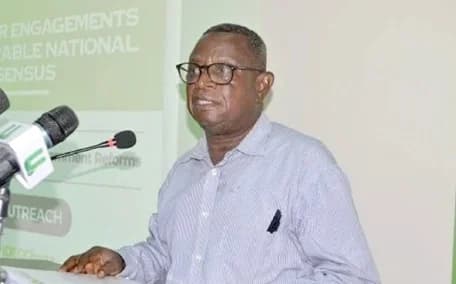
The National Democratic Congress (NDC) has intensified its oversight of development initiatives in the Volta Region, with its regional communication team conducting an extensive monitoring exercise across the Agortime-Ziope, Ketu South, Ketu North, and Anloga districts. Led by Regional Communication Officer Kafui Agbleze, the team assessed various projects in education, health, and infrastructure, including the Blekusu Sea Defence Project and several Community-based Health Planning and Services (CHPS) compounds. These inspections are part of a broader effort to ensure transparency and accountability under President John Dramani Mahama’s ‘Resetting Agenda,’ highlighting the administration's focus on completing vital community infrastructure to protect coastal areas and improve local service delivery.
Simultaneously, the Institute for Democratic Governance (IDEG) has raised significant concerns regarding proposed reforms to the local government system. IDEG has formally opposed the government's proposal for the President to nominate candidates for District Chief Executive (DCE) positions, arguing that such a move undermines the principles of democratic choice. Senior Research Fellow Mr. Kwesi Jonah emphasized that DCEs should be elected directly by the people through a free process involving all political parties. IDEG maintains that allowing the President to shortlist candidates restricts the electorate's ability to hold local leaders accountable and excludes non-government-aligned political voices from the governance process.
In a related clarification on government policy, the Presidential Advisor on the 24-Hour Economy, Augustus Goosie Tanoh, has distinguished between the 24-Hour Economy Authority and the ongoing 24-hour market programs. Mr. Tanoh noted that while 262 Metropolitan, Municipal, and District Assemblies (MMDAs) are implementing 24-hour market initiatives funded through the District Assemblies Common Fund, these projects fall under the jurisdiction of the Ministry of Local Government rather than the Authority itself. This clarification comes amid legal challenges and is intended to streamline the public’s understanding of how different arms of the government are contributing to the broader economic agenda.
At the local and traditional levels, governance remains dynamic with significant developments in the Bono and North East regions. The Wenchi Traditional Council has indefinitely suspended the Twafohene, Nana Akora Tua Adutwum Kyeremeh Siasaa Kufour IV, following allegations of traditional stool and land-related breaches. Meanwhile, the Bunkpurugu-Nakpanduri District Assembly has allocated land for a permanent Local Peace Council office. Supported by the NGO CONGINTA, this project aims to provide a dedicated hub for mediation and conflict prevention. These localized actions reflect a national trend toward strengthening institutional frameworks, whether through traditional accountability or the physical infrastructure of peacebuilding, as the country navigates its current political landscape.
Related topic
NDC (National Democratic Congress): Latest News →

