••
COP Osman Abdul Razak Warns of Rebranded Vigilante Networks as Experts Question Effectiveness of Ghana's Anti-Vigilantism Law
•3 min read•16 sources
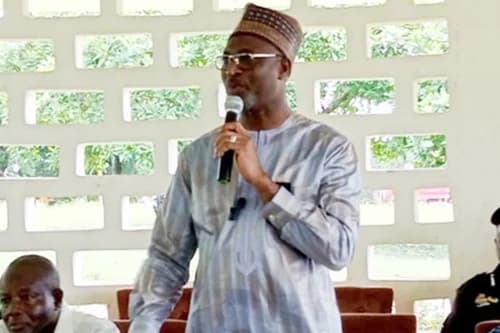
National Security Coordinator COP Osman Abdul Razak has issued a stark warning regarding the evolution of political vigilantism in Ghana, revealing that groups have moved into covert online spaces and rebranded to evade detection. Speaking at a National Policy Dialogue organized by Election Watch Ghana, COP Abdul Razak disclosed that former vigilante groups are now operating under titles such as "internal security teams," "volunteer task forces," and "community security initiatives." These groups are increasingly utilizing encrypted chat platforms and social media for mobilization, a shift that complicates traditional monitoring. To counter this, the National Security Secretariat is proposing an 18-month masterplan ahead of the 2028 general elections, involving intelligence mapping, youth engagement, and proactive operations starting at least a year and a half before polls.
While state security agencies focus on future threats, legal and security experts have raised significant concerns about the Vigilantism and Related Offences Act, 2019 (Act 999). Security Consultant Richard Kumadoe and former National Security Minister Francis Poku have both criticized the law, with Poku labeling it a "knee-jerk reaction" to the 2019 Ayawaso West Wuogon by-election violence. Critics argue that the Act’s stringent evidentiary requirements and harsh mandatory penalties make it difficult to enforce, suggesting that strengthening existing criminal laws would have been more effective. Election Watch Ghana further noted that seven years after the law was conceived, public confidence remains low due to perceived selective application and a lack of visible prosecutions.
The political landscape complicates enforcement, according to Colonel Festus Aboagye (Rtd), who claimed that the New Patriotic Party (NPP) and the National Democratic Congress (NDC) share a "gentleman’s agreement" to avoid prosecuting each other's members for political violence. Aboagye also criticized the politicization of security services, alleging that parties use recruitment into national security institutions to accommodate loyal "foot soldiers." The NPP has refuted these claims, with Deputy General Secretary Haruna Mohammed asserting that the party has fulfilled its obligations by disbanding associated groups. Mohammed argued that the law itself is sound, and any lack of results stems from the failure of law enforcement agencies to carry out their duties independently of political influence.
Providing an update on accountability for past unrest, Interior Minister Mohammed-Mubarak Muntaka revealed that while 26 individuals have been prosecuted for violence during the 2020 and 2024 elections, 13 suspects remain at large. This comes as President John Mahama has forwarded a comprehensive report on election violence to the Attorney-General for further action, signaling the administration's commitment to justice. However, figures like Kofi Totobi Quakyi, Ghana’s first National Security Minister in the Fourth Republic, expressed lingering disappointment over the handling of earlier reports, such as the Emile Short Commission of Inquiry, suggesting that past failures to prosecute high-profile assailants have fostered a culture of impunity.
As the country looks toward future electoral cycles, the consensus among stakeholders highlights a need for a shift from containment to prevention. COP Abdul Razak emphasized that private security firms acting as political militias face license revocation and prosecution under Act 999. The path forward involves not only rigorous legal enforcement but also addressing the systemic "winner-takes-all" political culture that incentivizes the formation of vigilante groups. Ensuring that the 2028 elections remain peaceful will depend on whether the state can successfully monitor these new, encrypted networks and whether the judiciary can demonstrate neutral, consistent application of the law against all political actors.
Related topic
NDC (National Democratic Congress): Latest News →

