••
Finance Minister to Present 2026 Mid-Year Budget Review Amidst Revenue Shortfalls and Debt Concerns
•2 min read•11 sources
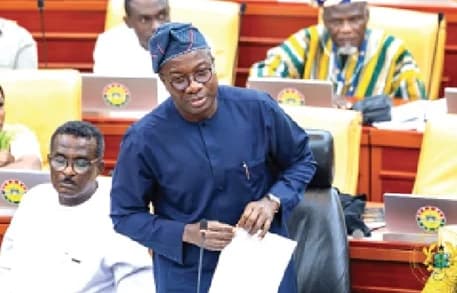
Ghana’s Minister of Finance, Dr. Cassiel Ato Baah Forson, is scheduled to present the Mid-Year Review of the 2026 Budget Statement and Economic Policy to Parliament on Thursday, July 23. This high-stakes presentation comes as the government faces intense scrutiny over its fiscal management and domestic revenue mobilization. The review will be followed by a series of parliamentary debates starting Friday, July 24, and concluding on Monday, July 27. To manage a significant legislative backlog of 486 pending referrals, Majority Leader Mahama Ayariga has scheduled an additional parliamentary sitting for Saturday, July 25, urging all members to participate in addressing outstanding business and ministerial questions.
The upcoming review is set against a backdrop of challenging fiscal data from the first quarter of 2026. Dr. Gideon Boako, Deputy Ranking Member of Parliament's Finance Committee, has criticized the government for a 29% reduction in expenditure following a 4.5% shortfall in revenue targets during Q1. According to Dr. Boako, key revenue streams have severely underperformed, with Value Added Tax (VAT) receipts falling below 6% of their target and crude oil receipts lagging by 37%. He noted that this trend mirrors 2025, when a 2.2% revenue shortfall led to a 13% spending cut, and warned that these persistent gaps are forcing the administration to rely on borrowing to fund essential services.
A significant point of contention remains the government's recent acquisition of a US$300 million World Bank loan for the Secondary Education Transformation project. The Minority in Parliament has slammed the decision, arguing that returning to the debt market so soon after exiting an International Monetary Fund (IMF) program reflects weak fiscal discipline. In response, Finance Committee Chairman Isaac Adongo clarified that the loan is strategically intended to improve secondary education infrastructure and eliminate the double-track system. The government will also contribute US$23 million in counterpart funding to ensure the project's success while attempting to stabilize the education sector's financing.
Looking forward, the Finance Ministry is also prioritizing the rebasing of Ghana’s Gross Domestic Product (GDP) and Consumer Price Index (CPI) data, which has not been updated since 2016. Dr. Forson emphasized that accurate statistical data is the foundation of effective economic planning and job creation. As the Mid-Year Review approaches, the focus will remain on whether the government can present a sustainable path for revenue mobilization and debt management to reassure both the public and international markets of Ghana’s economic stability.